






What's Happening?
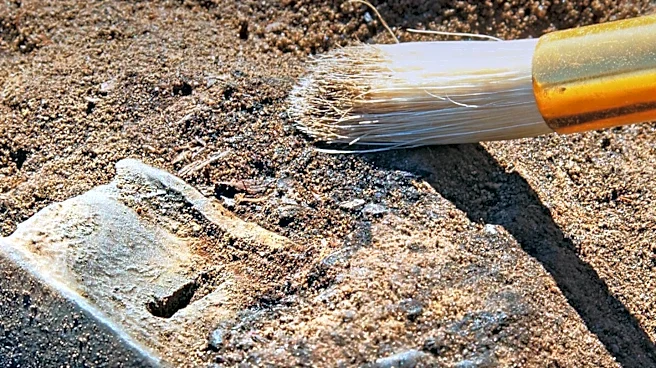
During an ecology field trip to Virginia's Eastern Shore, Brooklyn Rolph, a biology undergraduate student at Mary Baldwin University, discovered a stone spearpoint estimated to be between 3,000 and 4,500 years old. Rolph was searching for shark teeth
when she found the 6-inch artifact, identified by local archaeologists as a Lehigh/Koens-Crispin point. This type of stone tool was utilized by Indigenous people across the East Coast of the U.S. during the Late Archaic period, potentially serving as a spear or knife for prehistoric hunter-gatherers. The discovery occurred on the last day of the excursion, with the spearpoint found at the edge of an inlet as the tide was coming in, suggesting it might have been reburied soon after. The artifact is now the property of the Commonwealth of Virginia and has been transferred to the Virginia Department of Historic Resources for further study.
Why It's Important?
This discovery holds significant archaeological and historical importance for understanding the presence and activities of Indigenous populations in the Eastern U.S. The Lehigh/Koens-Crispin point provides tangible evidence of prehistoric hunter-gatherer societies in Virginia, offering insights into their tool-making techniques and daily lives thousands of years ago. For archaeologists, the artifact contributes to the broader understanding of cultural patterns and migration routes of early inhabitants along the East Coast. The find also highlights the potential for unexpected discoveries in seemingly ordinary environments, underscoring the value of ecological field studies and the role of citizen science in uncovering historical artifacts. The artifact's transfer to the Virginia Department of Historic Resources ensures its preservation and further academic analysis, enriching the state's historical records.
What's Next?
The spearpoint will undergo further study by archaeologists at the Virginia Department of Historic Resources. This research will likely involve detailed analysis of its material, construction, and context to glean more information about the Indigenous people who created and used it. The findings from this study could lead to publications or exhibitions, making the knowledge accessible to the public and academic communities. The discovery may also prompt additional archaeological surveys in the area, as the presence of one artifact often indicates the potential for more. For Mary Baldwin University, the event serves as a notable educational experience, potentially inspiring future students to engage in similar field research and contribute to historical and scientific understanding.
Beyond the Headlines
The discovery of this ancient spearpoint transcends its archaeological significance by connecting contemporary society with the deep history of Indigenous cultures in North America. It serves as a powerful reminder of the long human presence on the land now known as the United States, predating colonial settlements by millennia. Ethically, the handling and study of such artifacts require careful consideration and respect for the cultural heritage of Indigenous peoples. The fact that the artifact is now state property underscores the legal frameworks in place to protect historical finds, ensuring they are preserved for collective understanding rather than private ownership. This event also subtly highlights the ongoing process of uncovering and reinterpreting American history, often through serendipitous moments that reveal the rich tapestry of the past.