





What's Happening?
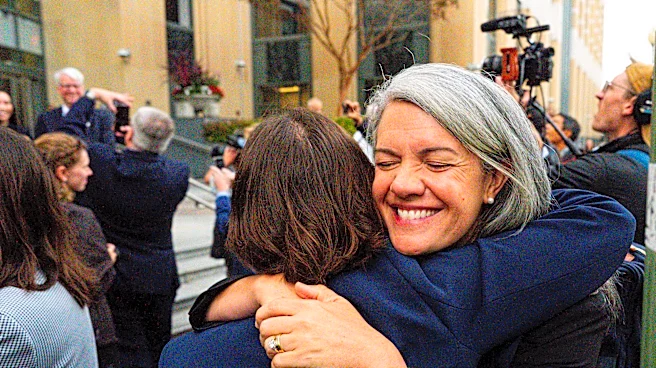
California has established its first-ever Social Health Council, an initiative led by First Partner Siebel Newsom, to address loneliness and strengthen community connections across the state. The council comprises leaders from state and local government,
community organizations, and academia. Its primary goals are to elevate loneliness and social isolation as public health priorities, create a recurring forum for various stakeholders to align efforts, and develop a roadmap for California to implement recommendations from the World Health Organization's Commission on Social Connection. The state has already been working on improving social connection through initiatives like the California Service Corps, which engages residents in service and volunteering to rebuild social networks and foster a sense of belonging. The council will integrate these existing efforts and identify new opportunities to facilitate everyday connections.
Why It's Important?
This initiative is crucial for U.S. society and public policy, as it recognizes social isolation and loneliness as significant public health issues, aligning with the World Health Organization's stance. In the U.S., only 36% of adults report engaging with neighbors for community activities at least once a year, and 44% rarely or never receive adequate social and emotional support. California's proactive approach to building social infrastructure and community-level solutions could serve as a model for other states grappling with similar challenges. By fostering stronger social ties, the council aims to improve overall health and well-being, potentially reducing the burden on mental health services and enhancing community resilience. This effort highlights a shift towards holistic public health strategies that consider social determinants of health alongside physical and mental well-being.
What's Next?
The Social Health Council will focus on developing a comprehensive roadmap for California to advance social connection. This will involve identifying opportunities to make connecting with others easier in daily life, such as strengthening 'third spaces,' enhancing community programming, and expanding volunteering opportunities. The council will also work to connect existing state resources, including public libraries, state parks, community schools, and mental health services like BrightLife Kids and Soluna. The outcomes of California's efforts, particularly the effectiveness of its roadmap and the impact on social isolation metrics, will be closely watched. Success in California could inspire similar initiatives at federal and state levels across the U.S., leading to a broader national strategy to combat loneliness and foster community engagement.
Beyond the Headlines
The establishment of California's Social Health Council delves into the less obvious, yet profound, implications of social disconnection in modern society. Beyond individual well-being, chronic loneliness can erode civic engagement, trust, and collective action, impacting the fabric of democratic societies. This initiative implicitly acknowledges that while digital connectivity is ubiquitous, it often fails to provide the depth of social connection necessary for human flourishing. The council's focus on 'third spaces' and community programming underscores a recognition of the importance of physical, shared environments for fostering genuine human interaction. This effort could trigger a cultural shift, encouraging a re-evaluation of urban planning, community resource allocation, and even personal habits to prioritize in-person social engagement. It also highlights the ethical responsibility of governments to address the social health of their populations, moving beyond traditional healthcare models to encompass broader societal well-being.