



What's Happening?
Chicago's O'Hare International Airport implemented a ground stop for arriving flights on Friday evening as severe thunderstorms approached the region. The Federal Aviation Administration (FAA) initially stated the ground stop would be in effect until
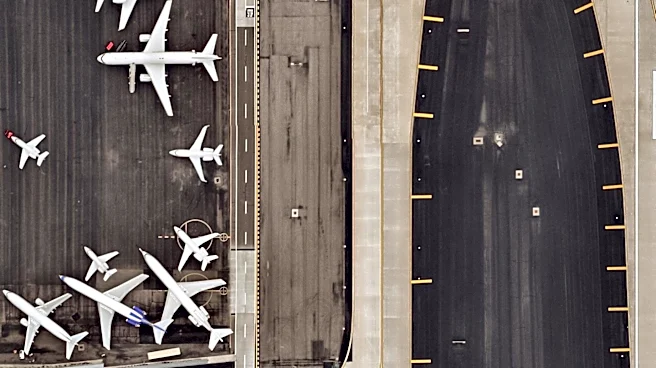
6:30 p.m., holding flights at their departure airports. Flights departing O'Hare also faced an average delay of 45 minutes. The FAA anticipated transitioning from a ground stop to a Ground Delay Program, but the weather-related disruptions were already causing a ripple effect, leading to backed-up taxiways and crowded gates. Severe thunderstorm warnings were issued for several Chicago-area counties, with much of the region under a severe thunderstorm watch.
Why It's Important?
The ground stop at O'Hare International Airport highlights the significant impact of severe weather on air travel infrastructure and operations. O'Hare is one of the busiest airports in the United States, serving as a major hub for domestic and international flights. Disruptions at such a critical transportation node can lead to widespread flight delays and cancellations, affecting thousands of travelers and potentially causing economic losses for airlines and related businesses. The ripple effect on taxiways and gates underscores the interconnectedness of airport operations, where a single weather event can cascade into broader logistical challenges. For passengers, these delays mean missed connections, extended travel times, and unexpected expenses, emphasizing the vulnerability of modern air travel to environmental factors.
What's Next?
While the ground stop has since been lifted, the immediate aftermath will likely involve continued efforts by airlines and airport authorities to manage the backlog of flights and passengers. Travelers should anticipate potential lingering delays and schedule adjustments as operations normalize. The FAA will continue to monitor weather conditions to prevent further disruptions. Airlines will focus on re-routing affected passengers and re-scheduling flights, which could take several hours or even days depending on the extent of the initial delays. Passengers with upcoming travel plans through O'Hare are advised to check their flight status regularly and be prepared for possible changes.
Beyond the Headlines
This incident underscores the broader challenge of managing air traffic in an era of increasingly unpredictable weather patterns, potentially linked to climate change. Airports and air traffic control systems are constantly evolving to enhance resilience against such events, but the sheer volume of air travel means that even brief disruptions can have substantial consequences. The reliance on sophisticated forecasting and real-time communication between the FAA, airlines, and airports is crucial. Furthermore, the event highlights the importance of robust contingency plans for both travelers and the aviation industry to mitigate the impact of unforeseen weather-related operational halts.