

What's Happening?
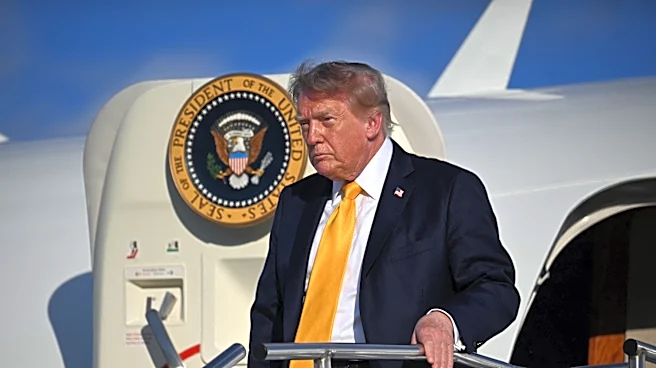
New photos of President Trump, taken over Labor Day weekend at the Trump National Golf Club Bedminster, show prominent bruising extending up his arm, reigniting public speculation about his health. These images, shared by former White House aide John
McEntee and a conservative social media influencer, depict visible discoloration reaching past his hands. This is not the first instance of such bruising; President Trump has frequently been photographed with similar marks on his hands, which he has attempted to conceal with makeup. The White House has previously attributed these recurring bruises to his daily 325 mg aspirin regimen for cardiovascular prevention, which thins his blood and increases susceptibility to bruising from minor contact. Additionally, in 2025, former White House Press Secretary Karoline Leavitt announced that President Trump has chronic venous insufficiency, a common vein condition that can cause localized swelling, skin discoloration, and blood pooling in the limbs. The administration has also cited "tissue damage from frequent handshaking" as a primary cause for trauma to his hands and lower arms.
Why It's Important?
The recurring health concerns surrounding President Trump are significant due to their potential impact on public perception and political discourse, especially given his age and role as a prominent public figure. While the White House has provided explanations for the bruising, the persistent visual evidence and ongoing speculation can fuel narratives about his fitness for office. This situation highlights the intense scrutiny placed on the health of U.S. leaders and the public's demand for transparency. Critics often use such observations to question a leader's physical and cognitive capabilities, potentially influencing voter confidence and political stability. The administration's consistent efforts to explain these health observations underscore the importance of managing public perception regarding the President's well-being, as it can affect national and international confidence in leadership.
What's Next?
The ongoing public discussion about President Trump's health is likely to continue, particularly as he remains a central figure in U.S. politics. Future public appearances and photographs will likely be scrutinized for any signs that could either confirm or contradict the White House's explanations regarding his health. Medical professionals and political commentators may continue to offer their interpretations, further contributing to the public discourse. The administration will likely maintain its stance, reiterating previous explanations about his medical conditions and medication. The broader implications could include continued calls for greater transparency regarding the health of public officials, potentially leading to more detailed medical disclosures in the future for high-profile political figures.
Beyond the Headlines
Beyond the immediate health concerns, this situation touches upon deeper issues of public trust, media scrutiny, and the ethics of discussing a public figure's health. The constant analysis of President Trump's physical appearance, gait, and cognitive remarks by both the public and media raises questions about the balance between a leader's right to privacy and the public's right to know about their leader's health. It also highlights the role of social media in amplifying observations and speculation, sometimes without full medical context. The use of makeup to conceal bruises, as noted by makeup artists, adds another layer to the narrative, suggesting an effort to manage public image amidst health concerns. This ongoing scrutiny could contribute to a broader societal conversation about age, health, and leadership in the public sphere, potentially influencing how future political candidates are perceived and evaluated.