
What's Happening?
Kosovo's agriculture is facing significant challenges due to climate change, with unpredictable weather patterns affecting crop yields. Farmers like Habib Dina have experienced severe frost damage to vineyards,
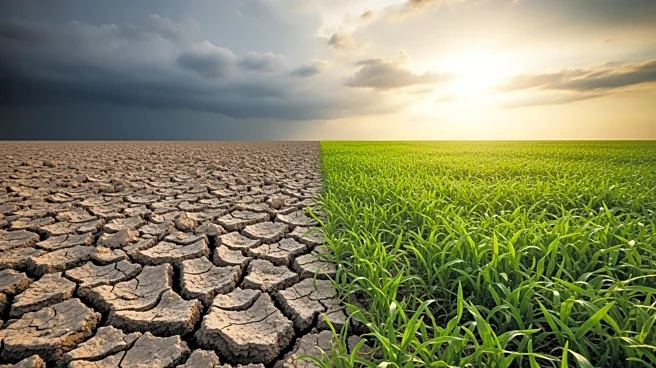
while erratic rainfall and prolonged heat waves have disrupted traditional farming practices. The Ministry of Agriculture reports that climate change is causing reduced yields, water stress, and erosion. A 2024 NATO report highlights Kosovo's vulnerability to climate change, predicting increased temperatures and water shortages. The agricultural sector, both a victim and contributor to climate change, is struggling to adapt to these rapid changes.
Why It's Important?
The impact of climate change on Kosovo's agriculture has broader implications for food security, economic stability, and rural livelihoods. As traditional farming methods become less reliable, there is an urgent need for adaptation strategies to mitigate the effects of climate change. The situation underscores the importance of sustainable agricultural practices and effective water management. Without intervention, the agricultural sector may face declining productivity, increased import dependency, and economic losses. The challenges in Kosovo reflect a global issue, highlighting the need for international cooperation and policy development to address climate change's impact on agriculture.