



What's Happening?
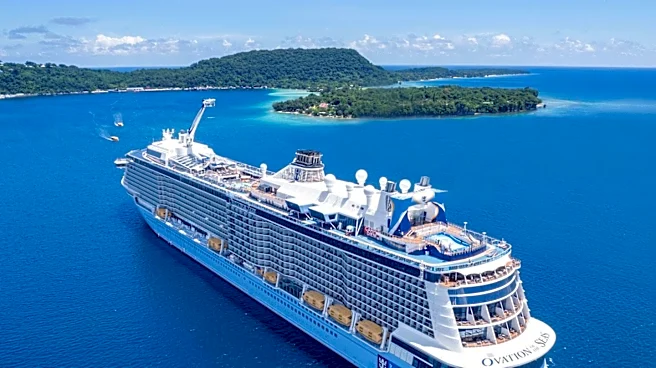
A Royal Caribbean cruise ship employee, identified as a pianist on the 'Ovation of the Seas,' was rescued by two Newport Beach fishermen after spending approximately nine hours treading water in the Pacific Ocean. The incident occurred near Catalina Island,
with the man found nearly 20 miles offshore. Fishermen Sean Norton and Grant Garrett spotted the individual while returning from a fishing trip and pulled him aboard their boat. The rescued man, who remains unidentified, informed his rescuers that he was a pianist on the Royal Caribbean vessel. Following his rescue, an emergency maritime call was placed, and Newport Beach lifeguards responded. The U.S. Coast Guard confirmed that the man was hospitalized and is expected to survive. The Coast Guard has initiated an investigation into how the crew member went overboard from the ship, which was en route to Ensenada, Mexico, from Long Beach.
Why It's Important?
This incident highlights critical safety protocols and emergency response procedures within the cruise line industry. The survival of the crew member after such an extended period in the open ocean underscores the unpredictable nature of maritime incidents and the importance of rapid detection and rescue capabilities. For Royal Caribbean Group, the investigation by the U.S. Coast Guard will scrutinize their onboard safety measures and crew monitoring systems. The outcome of this investigation could lead to potential adjustments in operational procedures across the cruise industry, particularly concerning crew welfare and overboard detection technologies. The event also brings attention to the role of civilian mariners in maritime rescues, demonstrating the effectiveness of community vigilance in remote oceanic environments.
What's Next?
The U.S. Coast Guard will continue its investigation to determine the circumstances under which the Royal Caribbean crew member went overboard. This inquiry will likely involve reviewing ship logs, surveillance footage, and interviewing crew members to ascertain if any protocols were breached or if there were any contributing factors to the incident. Royal Caribbean Group has stated they are providing support to their employee, but further details are withheld to respect privacy. Depending on the findings, the Coast Guard may issue recommendations or mandates for improved safety measures for cruise lines operating in U.S. waters. The incident could also prompt internal reviews by Royal Caribbean and other cruise operators to enhance their overboard detection systems and crew safety protocols.
Beyond the Headlines
The survival of the pianist for nine hours in the Pacific Ocean raises questions about human endurance and the specific conditions that allowed for his survival, such as water temperature, which was noted to be unusually warm. This event could spark discussions within the maritime safety community about the efficacy of current 'man overboard' detection systems, which have been a subject of ongoing debate and technological development. Furthermore, the incident may prompt a broader conversation about the mental health and well-being of cruise ship crew members, who often work long hours in demanding environments far from home. The privacy stance taken by Royal Caribbean also highlights the delicate balance between corporate transparency and employee confidentiality in such sensitive situations.