








What's Happening?
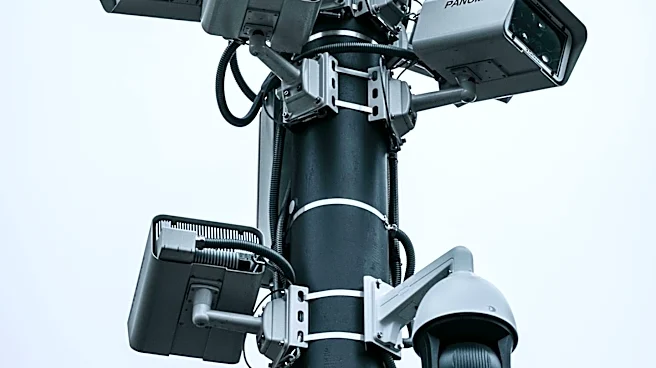
The Hamilton County Sheriff's Office has announced a temporary halt to its use of Flock camera technology, which includes 75 license-plate readers across the county and townships. Sheriff Charmaine McGuffey stated that all Flock cameras will cease recording
license plates, and the office will no longer access information provided by these cameras. This decision comes in response to growing public concerns regarding privacy and potential misuse of the technology. McGuffey emphasized that this is a 'pause' to allow for the establishment of stronger guardrails and parameters for the cameras' use, with the office looking to Flock and the Ohio legislature for guidance. The Sheriff's Office confirmed that no deputy has misused the technology, and the contract allows for cloaking or removing the cameras without additional cost to the county.
Why It's Important?
This pause by the Hamilton County Sheriff's Office highlights a broader national debate surrounding the balance between public safety and individual privacy in the age of advanced surveillance technology. The increasing deployment of license-plate readers by law enforcement agencies across the U.S. has raised significant questions about data retention, potential for abuse, and the scope of government surveillance. Several communities in Greater Cincinnati, including Newport, Independence, and Oxford, have already ended their Flock camera programs due to public backlash. U.S. Representative Thomas Massie has even introduced the 'Flock-Off Act' to block federal funds for such systems, arguing they infringe on privacy. This development in Hamilton County underscores the growing demand for transparency and accountability in how these technologies are used, potentially influencing policy decisions and public discourse on surveillance nationwide.
What's Next?
The Hamilton County Sheriff's Office will work with Flock and the Ohio legislature to develop stronger parameters for the use of license-plate reader technology. This collaborative effort aims to address privacy concerns while potentially allowing for the technology's reintroduction with enhanced safeguards. Flock, the company behind the cameras, has already begun implementing changes in response to public backlash, including reducing the default data retention period from 30 days to seven and making misuse detection mandatory for all customers. The outcome of these discussions and the effectiveness of the new guardrails will likely determine if and when the Flock cameras are reactivated in Hamilton County. This situation could also set a precedent for other jurisdictions grappling with similar issues, potentially leading to more widespread policy changes regarding surveillance technology.
Beyond the Headlines
The controversy surrounding Flock cameras in Hamilton County delves into fundamental questions about the nature of privacy in a technologically advanced society and the evolving role of law enforcement. While proponents argue that these cameras are crucial tools for solving crimes and enhancing public safety, critics contend that their widespread use creates a dragnet surveillance system that can track innocent citizens without probable cause. The debate touches upon the ethical implications of collecting and storing vast amounts of personal data, the potential for mission creep, and the erosion of civil liberties. The push for 'stronger guardrails' reflects a societal effort to define acceptable boundaries for surveillance, balancing security needs with the protection of individual rights. This ongoing dialogue will likely shape future legislation and public attitudes toward technology's integration into daily life and law enforcement practices.