


What's Happening?
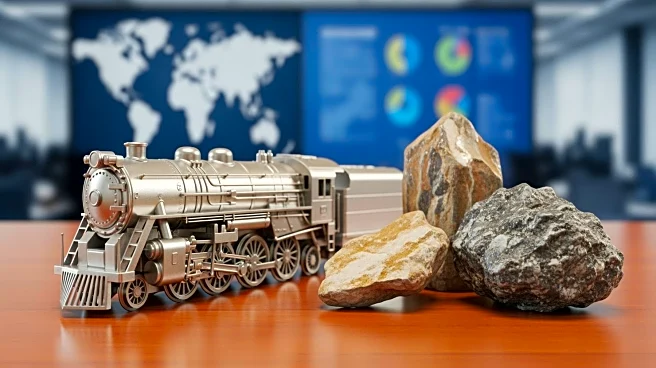
The Trump administration is actively pursuing partnerships with Pakistan in the minerals and rail sectors. During Finance Minister Muhammad Aurangzeb's visit to Washington, U.S. officials proposed the sale of American locomotives and collaboration on mineral assessments.
The U.S. is interested in Pakistan's critical minerals sector, with plans to secure offtake agreements for expedited extraction. The U.S. Congress has established a $135 billion fund for global investments in critical minerals, aiming to counter Chinese dominance in this area. Additionally, the U.S. Exim Bank has approved a $1.25 billion loan for the Reko Diq Mining Company in Balochistan.
Why It's Important?
This initiative reflects the Trump administration's strategic focus on securing critical minerals, which are essential for various industries, including technology and defense. By investing in Pakistan's mineral sector, the U.S. aims to diversify its supply chain and reduce reliance on Chinese-controlled resources. The proposed sale of locomotives also highlights the administration's efforts to strengthen economic ties with Pakistan, potentially boosting U.S. exports and supporting American manufacturing jobs. These actions align with the administration's broader economic agenda, which emphasizes energy, critical minerals, and deregulation.
What's Next?
Future developments may include formal agreements between the U.S. and Pakistan on mineral extraction and locomotive sales. The U.S. may continue to engage with Pakistani authorities to finalize these deals, potentially leading to increased American presence in Pakistan's mineral sector. The Trump administration's focus on critical minerals and infrastructure could drive further investments in similar projects globally. Additionally, the U.S. may explore opportunities to collaborate with Pakistan on digital finance solutions, as indicated by discussions on cross-border digital frameworks.
Beyond the Headlines
The U.S. interest in Pakistan's minerals and rail sectors may have broader geopolitical implications, particularly in the context of U.S.-China relations. By securing mineral resources in Pakistan, the U.S. could strengthen its strategic position in the region and reduce China's influence. The collaboration on locomotive sales and digital finance solutions may also enhance bilateral relations, fostering economic cooperation and mutual benefits. These initiatives could contribute to regional stability and economic development, aligning with the Trump administration's foreign policy objectives.