




What's Happening?
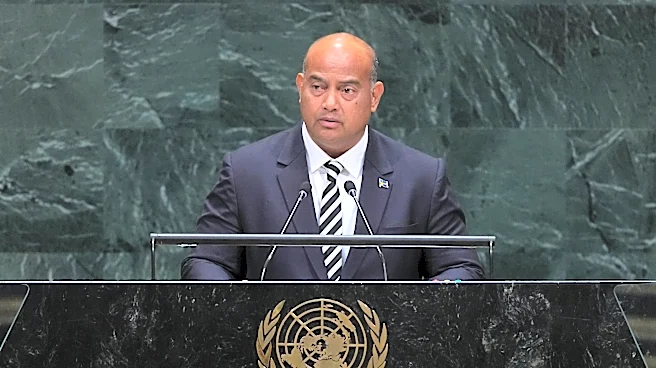
The 2026 National Lifeline Utilities Forum in New Zealand revealed significant vulnerabilities in the nation's preparedness for long-term global shocks, particularly concerning food security. While the forum showcased advancements in infrastructure resilience,
speakers emphasized that planning often stops at national borders and focuses on short-term outages. A key omission highlighted was the lack of representation from food production, fertilizer industries, or the Ministry for Primary Industries (MPI) at the forum, and the absence of a sector coordinating chair for food. The 'NZCat report' indicated that only about eight days of diesel could be drawn without outages, impacting food production. The forum underscored that New Zealand's largest risks originate offshore and can last for weeks or months, potentially without external assistance. The need for a national food security strategy was strongly advocated, including the quantification of critical stocks like liquid fuel and food, and pre-agreed allocation plans.
Why It's Important?
This discussion is crucial for understanding national resilience in the face of global catastrophic risks. The forum's findings suggest that New Zealand, despite its perceived isolation, is highly dependent on international supply chains for essential goods like diesel, fertilizer, and food. The absence of a comprehensive food security strategy means the country could face severe shortages during prolonged global disruptions, impacting its population's basic needs. The call to widen the National Vulnerability Assessment to include global dependencies and material inputs for basic necessities signifies a shift towards a more realistic and robust risk assessment. Furthermore, treating food as critical infrastructure and integrating its production and supply into the national lifeline system is vital for ensuring sustained functioning during crises. The emphasis on public mandate for resilience planning highlights the democratic aspect of preparing for such events, ensuring that citizens are informed and involved in decisions about national survival.
What's Next?
New Zealand's 'Reality of Food' working group is slated to deliver a detailed food security briefing to the incoming government, advocating for a national food security strategy. This initiative aims to address the identified gaps by integrating food production, fertilizer, and MPI into the lifeline system with a dedicated sector coordinator. The National Vulnerability Assessment is expected to be 'red-teamed' against global dependencies, assuming no outside help during a crisis. There is also a push to plan for weeks and months of disruption, focusing on 'alternative functioning' rather than just restoring normal services. The Commerce Commission Chair framed resilience as insurance, suggesting that the cost of this insurance needs to be decided with the citizens who ultimately pay for it. Deliberative processes, such as citizens' assemblies, are proposed to gain a public mandate for Plan B mitigation options, ensuring a realistic picture of global hazards and supply chain fragilities is presented to the public.
Beyond the Headlines
The forum's insights extend beyond immediate policy changes, touching upon deeper ethical and societal implications. The discussion about 'resilience net gain'—where strengthening one asset should not weaken another—highlights the interconnectedness of critical infrastructure and the need for holistic planning. The recognition that 'a plan nobody has tested is just an assumption' underscores the importance of practical exercises and real-world simulations to validate preparedness strategies. The call for citizens to decide 'how much resilience to buy' and to be given a 'realistic picture' of global risks points to a fundamental shift in governance towards greater transparency and public engagement in national security matters. This approach acknowledges that resilience is not merely a technical challenge but a societal choice, requiring collective understanding and commitment to navigate complex global uncertainties and ensure long-term survival.