
What's Happening?
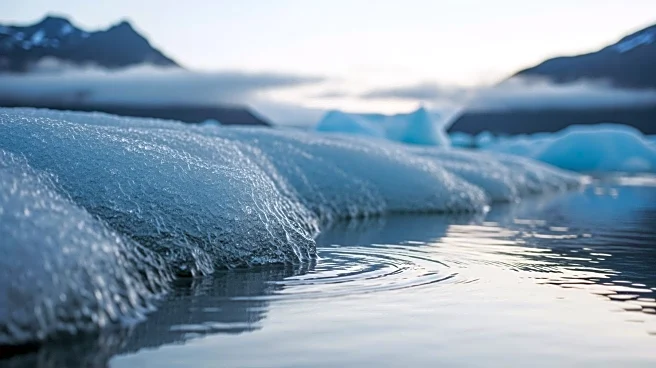
A recent study published in the journal Nature Climate Change highlights the alarming rate at which glaciers are disappearing globally due to climate change. The research, led by glaciologist Lander Van
Tricht, indicates that the world is currently losing about 1,000 glaciers annually. However, this rate is expected to increase significantly, with projections suggesting that up to 3,000 glaciers could vanish each year between 2040 and 2060 if global temperatures rise by 2.7°C. The study emphasizes the critical role of government action in determining whether the world loses 2,000 or 4,000 glaciers annually by mid-century. The findings underscore the urgency of ambitious climate policies to mitigate these losses and preserve the remaining glaciers.
Why It's Important?
The potential loss of thousands of glaciers annually has significant implications for global ecosystems, local cultures, and economies. Glaciers are crucial for maintaining biodiversity, regulating water supply, and supporting tourism industries. Their disappearance could lead to severe water shortages, impacting agriculture and drinking water supplies for millions of people. Additionally, the loss of glaciers contributes to rising sea levels, which threaten coastal communities worldwide. The study's findings highlight the need for immediate and effective climate action to prevent catastrophic environmental and socio-economic consequences.
What's Next?
The study calls for urgent international cooperation to implement and strengthen climate policies aimed at limiting global warming to 1.5°C, as outlined in the Paris Agreement. Governments are urged to enhance their climate commitments and take decisive action to reduce greenhouse gas emissions. The research also suggests that monitoring and preserving smaller glaciers, which are more vulnerable to climate change, should be prioritized. As the world approaches 'peak glacier extinction,' the focus will likely shift towards adaptation strategies to cope with the inevitable impacts of glacier loss.
Beyond the Headlines
Beyond the immediate environmental impacts, the loss of glaciers poses ethical and cultural challenges. Many communities view glaciers as integral to their cultural heritage and identity. The disappearance of these natural landmarks could lead to a loss of cultural diversity and historical knowledge. Furthermore, the study raises questions about intergenerational equity, as future generations may inherit a world with significantly diminished natural resources and increased environmental challenges. Addressing these broader implications requires a holistic approach that considers both scientific and cultural perspectives.