







What's Happening?
Seven of the eight major Bay Area toll bridges, including Antioch, Benicia-Martinez, Carquinez, Dumbarton, Richmond-San Rafael, San Francisco-Oakland, and San Mateo-Hayward Bridge, are scheduled to increase tolls again starting January 1, 2027, and continue
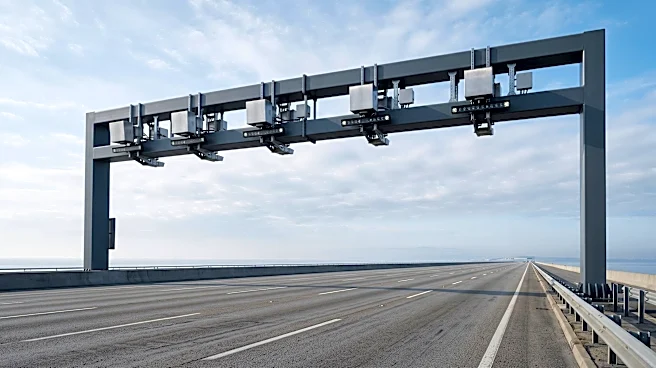
through 2030. This increase is part of a new pricing structure introduced by the Metropolitan Transportation Commission (MTC) and Caltrans' Bay Area Open Road Tolling (ORT) initiative. The ORT project aims to remove physical toll booths to improve traffic flow, enhance safety, reduce vehicle idling, and decrease greenhouse gas emissions. While toll booths are slated for dismantling in Spring 2027, toll prices have already begun to rise. The Regional Measure 3 (RM) toll increase, which began on January 1, 2026, will continue to add $0.50 through 2030 for High-Occupancy Vehicles (HOVs) and FasTrak users with two- and multi-axle vehicles. Additionally, a new tiered pricing structure will introduce an extra $0.25 per pre-registered license plate account transaction and $1.00 per invoice transaction, both starting January 1, 2027. These changes will mark the first time California state-owned Bay Area bridge tolls reach double digits, with a daily commuter potentially paying $200 per month in tolls.
Why It's Important?
The impending increase in Bay Area bridge tolls to $10 by 2027 carries significant implications for commuters, businesses, and the regional economy. For daily commuters, the prospect of paying $200 per month in tolls represents a substantial increase in transportation costs, potentially impacting household budgets and discretionary spending. This could lead to shifts in commuting patterns, with some drivers seeking alternative routes or modes of transportation, or even reconsidering their places of residence relative to their workplaces. Businesses relying on freight transport across these bridges will also face higher operational costs, which could be passed on to consumers through increased prices for goods and services. The move towards electronic payment and the removal of toll booths, while intended to improve traffic flow and reduce emissions, also signifies a broader shift in infrastructure management and revenue collection. This could set a precedent for other urban areas grappling with traffic congestion and the need for infrastructure funding, potentially influencing future policy decisions regarding toll roads and transportation financing across the U.S.
What's Next?
The implementation of the new toll pricing structure will continue as planned, with the next significant increase scheduled for January 1, 2027. Caltrans is proceeding with the dismantling of physical toll booths, with a full closure of Westbound Interstate 580 (I-580) on the Richmond-San Rafael Bridge planned for November 14-15 to install a new overhead toll gantry system. This indicates a continued push towards the Open Road Tolling (ORT) initiative. Drivers are being encouraged to transition to electronic payment methods, such as FasTrak, before the physical toll plazas are fully removed. The Metropolitan Transportation Commission (MTC) will likely continue to monitor traffic patterns, revenue generation, and public response to the increased tolls. Future adjustments to the toll structure or additional transportation initiatives could be considered based on the outcomes of these changes. Commuters and freight operators will need to adapt to the new pricing and electronic payment systems, with potential impacts on daily routines and logistical planning.
Beyond the Headlines
The shift to a $10 toll and the complete removal of physical toll booths in the Bay Area represent more than just a price increase; they signify a broader evolution in urban infrastructure and transportation policy. The emphasis on electronic payment and open road tolling reflects a growing trend towards smart city initiatives and the use of technology to manage traffic flow and reduce environmental impact. However, this also raises questions about equitable access, as individuals without easy access to electronic payment methods or those with lower incomes may face disproportionate burdens. The substantial increase in commuter costs could exacerbate economic disparities and potentially influence regional migration patterns, as residents seek more affordable living and commuting options. Furthermore, the long-term success of these measures in reducing congestion and emissions will be closely watched, potentially serving as a model or cautionary tale for other metropolitan areas considering similar infrastructure overhauls. The move also highlights the ongoing challenge of funding critical infrastructure projects while balancing the needs and financial capacities of the public.