





What's Happening?
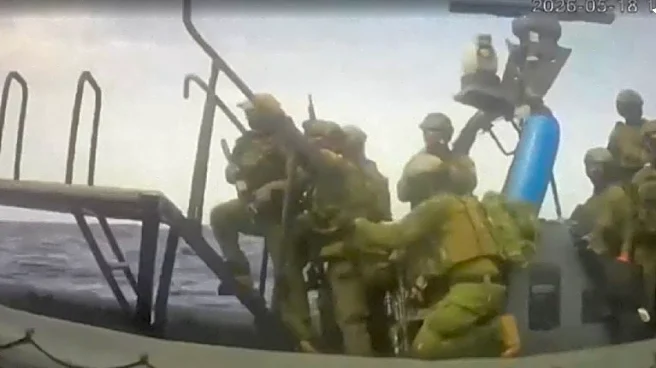
Israeli forces intercepted a flotilla attempting to deliver aid to Gaza, employing non-lethal means to stop the vessels. Video footage showed shots fired at two boats, but the Israeli foreign ministry clarified that no live ammunition was used. The flotilla,
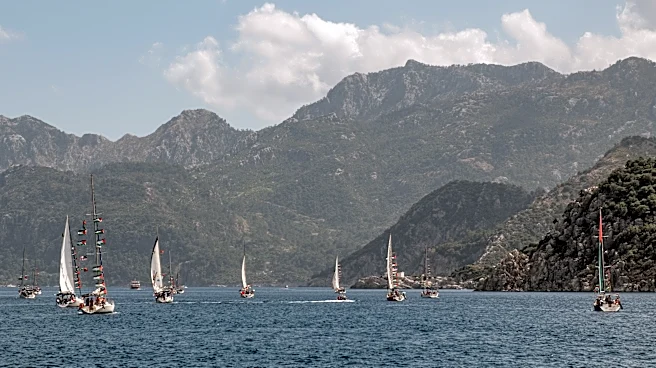
known as the Global Sumud Flotilla, consisted of 50 boats with 428 participants from over 40 countries. All participants were detained and transferred to Israeli vessels. The flotilla's mission was to deliver aid to Gaza, a region where over 2 million people have been displaced. Despite a ceasefire agreement in October, aid supplies remain insufficient according to Palestinians and international aid bodies. The U.S. Treasury imposed sanctions on four individuals associated with the flotilla, which it described as 'pro-Hamas'.
Why It's Important?
The interception of the flotilla highlights ongoing tensions in the region and the challenges of delivering humanitarian aid to Gaza. The use of non-lethal means by Israeli forces reflects a strategic approach to managing international scrutiny while maintaining control over access to Gaza. The U.S. sanctions against individuals associated with the flotilla underscore the geopolitical complexities and the U.S.'s stance on groups perceived as supporting Hamas. This incident may affect international relations, particularly with countries whose citizens were detained, and could influence future humanitarian efforts in the region.
What's Next?
The detained activists are expected to meet with their consular representatives, which may lead to diplomatic discussions between Israel and the countries involved. The international community, including organizations advocating for Palestinian rights, may increase pressure on Israel to allow more aid into Gaza. Future flotilla missions may be planned, potentially leading to further confrontations. The situation could also prompt discussions on the effectiveness and ethics of naval blockades and the role of international law in such interventions.