




What's Happening?
The European Union is encountering significant challenges in recruiting and retaining military personnel despite ambitious rearmament initiatives and increased defense spending. Industry insiders and European officials, including Emmanuel Jacob, president
of the European Organisation of Military Associations and Trade Unions (EUROMIL), highlight a growing urgency in addressing this manpower deficit. The European Parliament previously raised concerns in 2024, noting severe recruitment and retention problems across European armed forces. A survey conducted by EUROMIL, involving military associations from 11 member states, revealed that most respondents consider recruitment 'problematic' and retention either 'problematic' or 'critical.' Personnel commonly leave after approximately 10 years of service, citing low pay, poor work-life balance, and competition from the private sector as primary reasons. European Commissioner for Defence Andrius Kubilius has emphasized the need for substantial troop numbers, estimating that 100,000 soldiers would be required to match a potential Russian military buildup by 2030.
Why It's Important?
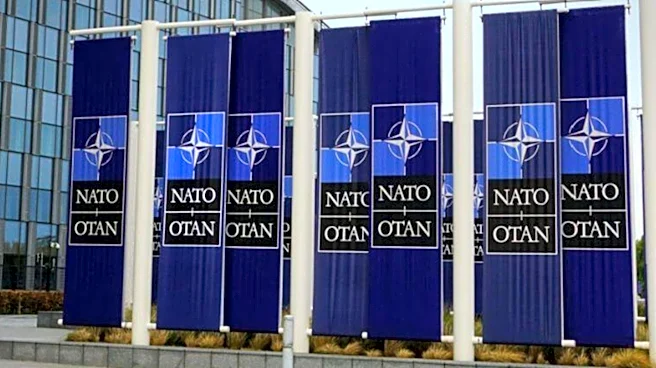
This recruitment crisis poses a direct threat to European security and the effectiveness of NATO's defense capabilities. The inability to staff the armed forces adequately undermines the significant financial investments being made in military hardware and technology. Without sufficient personnel, the EU's capacity to respond to external threats, as envisioned by its rearmament plans, is severely hampered. The issue extends beyond active duty, impacting the expansion of reservist pools, which are crucial for specialized skills like cyber defense and logistics. Steven Everts, director of the EU Institute for Security Studies (EUISS), points out that organizational reforms are lagging behind the rearmament drive, making it difficult to integrate reservists effectively. The problem also affects NATO, with the NATO Parliamentary Assembly's Defence and Security Committee (DSC) actively investigating the challenges, recognizing that a manpower shortage directly risks NATO's readiness, credibility, and long-term force sustainability in an increasingly complex global security environment.
What's Next?
Addressing the recruitment and retention crisis will require not only higher salaries, improved pensions, and better work-life balance, but also a broader cultural shift regarding military service. Defence expert Chris Kremidas-Courtney suggests that if military service is viewed negatively within society, recruitment will continue to suffer. Efforts to rebuild the 'social contract' around national defense are crucial to ensure Europe has the necessary soldiers. While the European Commission maintains that recruitment and retention are the responsibility of individual member states, a coordinated approach may become necessary given the scale of the problem. The NATO Parliamentary Assembly's DSC is expected to release a report in late November identifying structural and societal drivers of these challenges and their implications for alliance security. Potential measures could include volunteer recruitment or selective conscription, alongside significant organizational reforms to better integrate reservists and address the underlying issues that deter individuals from joining or remaining in the armed forces.
Beyond the Headlines
The European military recruitment crisis highlights a deeper societal challenge concerning national service and collective security in an era of evolving geopolitical threats. The reluctance to embrace military careers, influenced by factors like private sector competition and work-life expectations, reflects a shift in societal values and priorities. This situation could lead to a reliance on technological solutions over human capital, potentially altering the nature of warfare and defense strategies. Furthermore, the need for a 'cultural shift' suggests a disconnect between the perceived necessity of a strong defense and public willingness to participate in it. This could have long-term implications for national identity, civic duty, and the relationship between citizens and their governments regarding security responsibilities. The debate over volunteer recruitment versus conscription also touches upon fundamental questions of individual liberty versus state obligation in times of perceived threat, potentially leading to social unrest, as seen in protests against compulsory military registration in Germany.