





What's Happening?
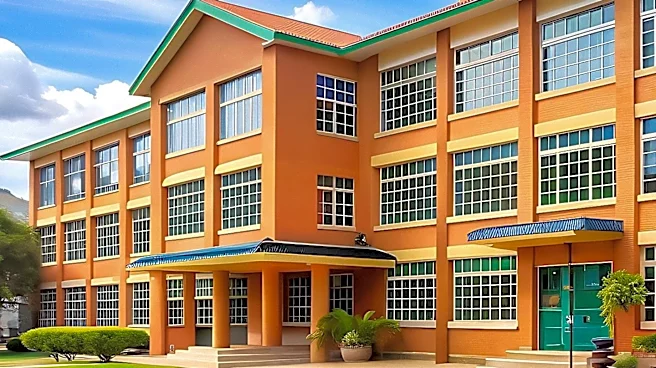
Albuquerque Public Schools (APS) has officially opened its first dedicated early childhood center at the former Duranes Elementary School location. The Duranes Early Childhood Center, which began its first day of school for preschool students aged 3 to
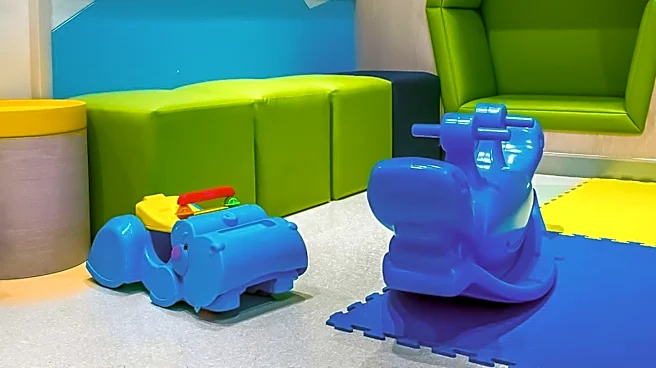
5 on Tuesday, is designed to serve up to 240 pre-kindergarten and special education pre-kindergarten students. As of this week, 70 students were enrolled. The establishment of this center addresses a significant demand for pre-K programs across New Mexico, particularly in Bernalillo County, where many children still lack access to preschool services. While APS operates 106 preschool classrooms district-wide, the Duranes center marks the first facility exclusively dedicated to pre-K students. The project cost approximately $36 million, with 15% funded by the state Legislature and the remainder approved by voters. The 36,463-square-foot facility includes 12 classrooms organized into three 'learning neighborhoods,' a cafeteria, and a commercial kitchen for culinary education.
Why It's Important?
The opening of the Duranes Early Childhood Center is a significant development for early childhood education in Albuquerque and New Mexico. It directly responds to the growing demand for pre-kindergarten programs, which are crucial for children's developmental and academic success. By providing a dedicated facility, APS aims to enhance the quality and accessibility of early education, potentially leading to improved long-term educational outcomes for its students. The center also serves as a training ground for future early childhood educators from the University of New Mexico and Central New Mexico Community College, addressing the broader need for qualified teachers in the field. This initiative highlights a statewide trend where, despite declining overall student enrollment in some districts, there is increasing interest and struggle to accommodate demand for free public preschool programs. The investment in such a facility underscores a commitment to early learning as a foundational element of the public education system.
What's Next?
The Duranes Early Childhood Center will continue to enroll students, with the capacity to reach 240 pre-K and special education pre-K students. The landscaping around the new school is still in progress, indicating ongoing development to complete the facility. APS Superintendent Gabriella Durán Blakey has noted the need for more sites and, critically, more teachers to meet the rising demand for pre-K programs across the state. This suggests that the success and model of the Duranes center could influence future expansions of early childhood education initiatives within APS and potentially other New Mexico school districts. The collaboration with local universities and community colleges for educator training is expected to continue, helping to build a sustainable pipeline of qualified early childhood professionals. The state's free pre-K program, which has seen an almost 10% increase in funded slots statewide since the previous fiscal year, will likely continue to expand to address the unmet demand in Bernalillo County and beyond.
Beyond the Headlines
The establishment of the Duranes Early Childhood Center reflects a broader societal recognition of the critical importance of early childhood education. Investing in pre-kindergarten programs has long-term benefits, including higher graduation rates, reduced crime rates, and increased economic productivity. By converting a former elementary school, which was closed due to low enrollment, into an early childhood center, APS demonstrates an adaptive approach to resource utilization in response to changing demographic and educational needs. This move also highlights the evolving landscape of public education, where early learning is increasingly seen not just as a childcare service but as a fundamental component of the educational continuum. The center's focus on providing a welcoming and inclusive environment, coupled with its role in training future educators, positions it as a potential model for addressing educational disparities and fostering community development through early intervention.