



What's Happening?
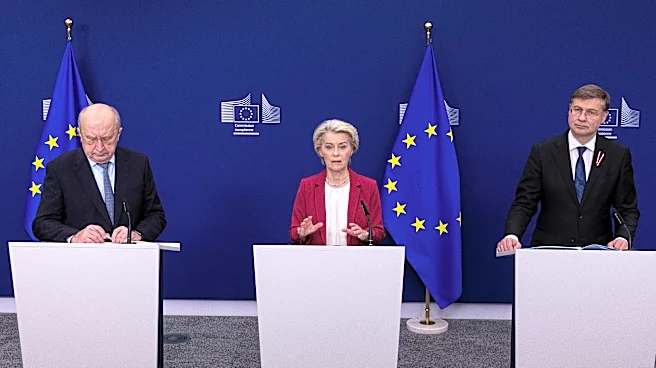
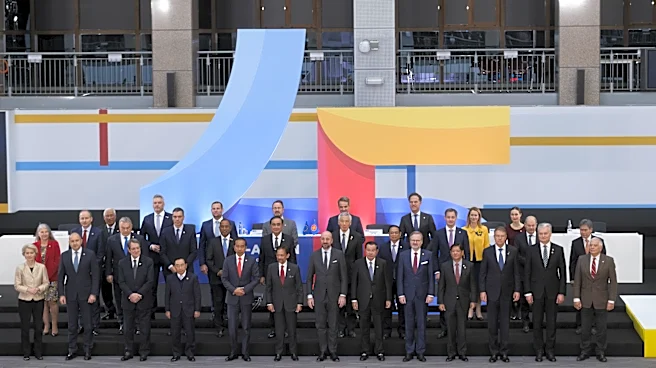
Uganda's Minister of Defence and Veteran Affairs, Hon. Kiryowa Kiwanuka, advocated for stronger international partnerships and Africa-centered security cooperation to address the growing link between armed conflict, terrorism, and organized crime. Speaking
at the European Union’s Schuman Security and Defence Forum 2026 in Brussels, Belgium, Minister Kiwanuka highlighted Uganda's four decades of experience with conflict, noting that insurgencies often transform into different forms of insecurity. He cited groups like the Lord’s Resistance Army (LRA) and the Allied Democratic Forces (ADF), which have evolved into transnational security threats by adopting tactics and networks associated with international terrorism, with the ADF now affiliated with the Islamic State. Kiwanuka attributed the rise of these threats to state fragility and institutional collapse in neighboring countries, creating vacuums exploited by terrorist groups, human traffickers, and illegal miners. He emphasized that lasting peace requires strong state institutions, economic development, and cooperation, rather than solely military interventions.
Why It's Important?
The call for enhanced cooperation underscores the global nature of evolving security threats, which increasingly blur the lines between terrorism, insurgency, and organized crime. This interconnectedness means that instability in one region, such as Africa, can have far-reaching implications for global security, including for the U.S. The U.S. has a vested interest in stability and counter-terrorism efforts worldwide, as transnational threats can directly impact its national security and economic interests. The Ugandan minister's perspective highlights that military solutions alone are insufficient; comprehensive strategies involving economic development, good governance, and public support are crucial. This approach aligns with broader international efforts to address root causes of instability, which can prevent the proliferation of extremist ideologies and criminal networks that could eventually pose threats to U.S. interests and allies.
What's Next?
The discussions at the Schuman Security and Defence Forum are likely to influence future policy dialogues and cooperation frameworks between African nations and European Union member states. Uganda's emphasis on Africa playing a central role in multilateral security arrangements suggests a push for more equitable partnerships where African countries are seen as sources of solutions, not just recipients of aid. This could lead to increased intelligence sharing, joint counter-terrorism operations, and coordinated efforts to build state capacity and promote economic development in vulnerable regions. For the U.S., these developments could mean opportunities to engage in multilateral initiatives that strengthen global security, potentially through diplomatic support, intelligence cooperation, and targeted development aid to bolster stability in regions prone to extremist activities.
Beyond the Headlines
The evolving nature of security threats, where civil conflicts morph into terrorism, organized crime, and cyber warfare, presents a complex challenge that goes beyond traditional security paradigms. The Ugandan minister's assertion that 'You cannot bomb your way out of the nexus. You must build your way out' points to a fundamental shift in understanding security. This perspective highlights the ethical and practical limitations of purely military responses and emphasizes the importance of human security, economic opportunity, and social cohesion as critical components of national and international security. For the U.S., this implies a need to integrate development, diplomacy, and defense strategies more cohesively, recognizing that long-term stability is built on addressing underlying grievances and fostering resilient societies, rather than solely on kinetic operations.