


What's Happening?
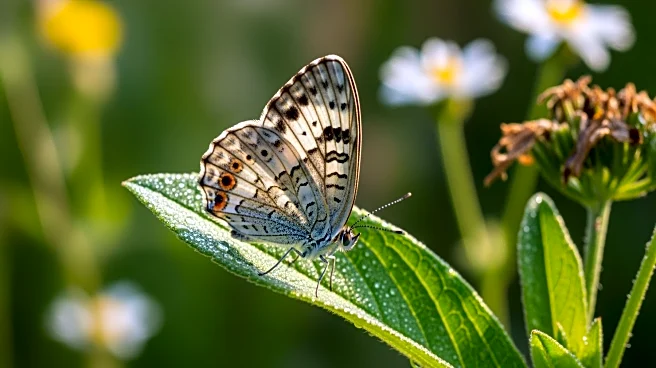
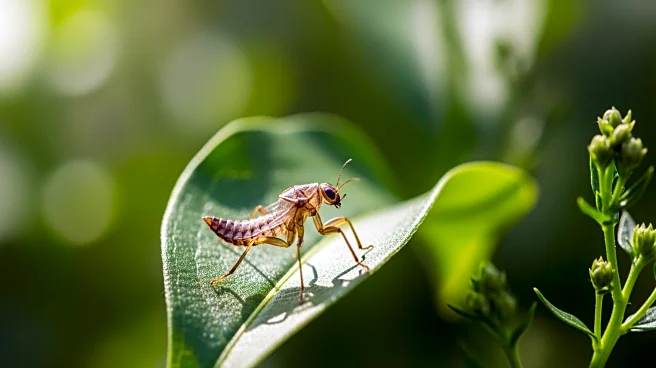
The global decline of insect populations has emerged as a significant environmental issue, with serious implications for biodiversity and ecosystem functionality. Insects play crucial roles in pollination, nutrient cycling, and as food sources for other
wildlife. However, they are facing unprecedented pressures from factors such as land use change, climate change, and pesticide application. Recent studies indicate that many insect species are declining at alarming rates, prompting urgent questions about the ecological consequences of these trends. A new collection titled 'Insects on the Brink: Unraveling Insect Declines and Global Biodiversity Loss' aims to synthesize research on these declines and foster interdisciplinary dialogue to develop innovative conservation strategies.
Why It's Important?
The decline in insect populations poses a significant threat to global biodiversity and the health of ecosystems. Insects are integral to many ecological processes, and their loss could disrupt food webs, reduce pollination services, and impair nutrient cycling. This could have cascading effects on agriculture, food security, and natural habitats. Understanding the causes and consequences of insect declines is crucial for developing effective conservation strategies and mitigating the impacts on ecosystems. The research collection seeks to address these challenges by exploring the complex interplay between environmental factors and insect biodiversity, ultimately contributing to more sustainable environmental management practices.
What's Next?
The collection encourages submissions that explore effective monitoring frameworks and conservation strategies to mitigate insect declines and promote resilience in insect communities. Researchers and practitioners are invited to engage with the urgent challenges posed by insect declines, with the goal of fostering a more sustainable coexistence with the natural world. This initiative could lead to the development of new policies and practices aimed at preserving insect populations and maintaining ecosystem health. As awareness of the issue grows, it may also prompt increased public and governmental support for conservation efforts.