





What's Happening?
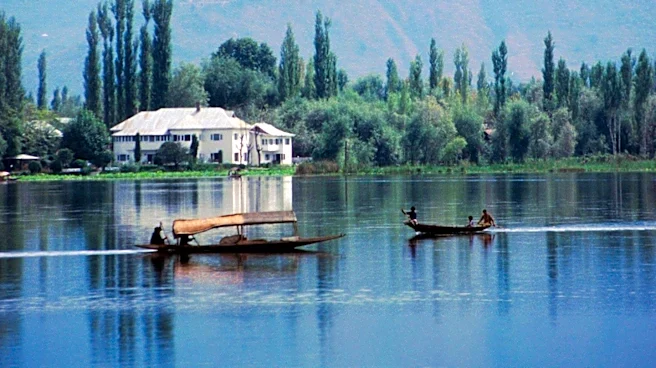
Jammu and Kashmir, often referred to as 'Paradise on Earth' due to its natural beauty, is currently grappling with a severe environmental crisis. Despite receiving 21 crore rupees (approximately 2.5 million USD) between 2019 and June 2022 under the National
Clean Air Programme (NCAP), only 0.5% of these funds, amounting to 12 lakh rupees (approximately 14,400 USD), have been utilized. This significant underutilization of funds raises serious questions about accountability and program execution. The region's capital, Srinagar, has seen its air quality ranking drop from 4th in 2023 to 26th among 39 Indian cities with populations over 10 lakh. Contributing factors to this decline include the open burning of municipal solid waste, lack of dust control mechanisms, increased vehicular emissions, unchecked illegal cement plants and stone crushers, and inadequate construction and demolition waste management. Furthermore, a recent Comptroller and Auditor General (CAG) report revealed that over 500 lakes in Jammu and Kashmir have either vanished or significantly receded due to encroachments, siltation, and untreated sewage inflow, weakening natural flood buffers. The report highlighted that 315 lakes, covering 1,537.07 hectares, have completely disappeared from official records.
Why It's Important?
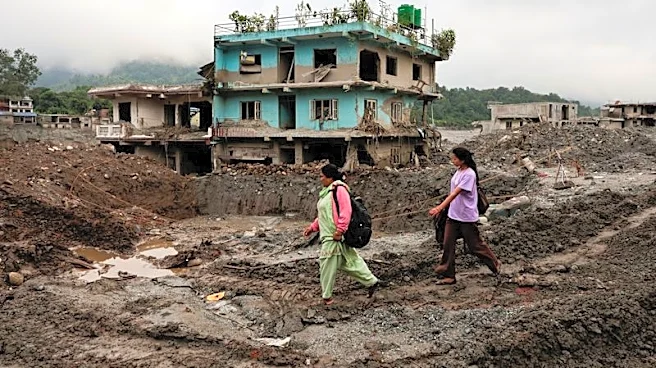
The environmental degradation in Jammu and Kashmir has profound implications for its ecosystem, public health, and long-term sustainability. The drastic decline in air quality in Srinagar, now worse than Delhi in some metrics, poses significant health risks to its residents. The disappearance of numerous lakes not only leads to ecosystem degradation and loss of biodiversity but also compromises the region's natural flood buffers, increasing its vulnerability to climate change impacts. The underutilization of environmental protection funds indicates a systemic failure in governance and resource management, which could exacerbate these issues. This situation also highlights a broader challenge in India regarding the effective implementation of environmental policies and the accountability of local authorities in managing allocated funds. The region's reliance on its natural beauty for tourism also faces a threat, potentially impacting local livelihoods and the economy.
What's Next?
Jammu and Kashmir faces a critical choice between continued crisis management and implementing a comprehensive climate response. The CAG report has recommended the establishment of a centralized and specialized authority with adequate resources and skilled manpower, including environmental and hydrological engineers, wetland ecologists, and GIS specialists, to ensure coordinated and effective lake conservation. The Supreme Court and National Green Tribunal have already intervened in cases of illegal mining, imposing significant environmental compensation on companies. The J&K Pollution Control Committee (JKPCC) has been tasked with retrieving these penalties. There is an urgent need for the government to act on these recommendations, improve fund utilization, and implement measurable goals with public accountability. Without a coordinated strategy encompassing infrastructure planning, pilgrimage management, mining enforcement, waste processing, groundwater protection, and disaster preparedness, the environmental crisis is likely to deepen, further impacting the region's natural heritage and the well-being of its inhabitants.
Beyond the Headlines
The environmental crisis in Jammu and Kashmir extends beyond immediate pollution concerns, touching upon deeper issues of governance, public awareness, and the balance between economic development and ecological preservation. The significant gap between allocated funds and their utilization points to potential bureaucratic inefficiencies or a lack of political will to prioritize environmental protection. The 'Kashmir model' of environmental management, or lack thereof, could serve as a cautionary tale for other regions facing similar challenges. The long-term shifts triggered by this degradation include altered climate patterns, increased frequency of natural disasters like cloudbursts and flash floods, and a potential decline in the region's unique flora and fauna. The ethical dimension involves the responsibility of current generations to preserve this 'Paradise on Earth' for future generations, while the legal implications include stricter enforcement of environmental laws and accountability for those who violate them. The cultural impact could be significant, as the region's identity is deeply intertwined with its pristine natural landscapes.