




What's Happening?
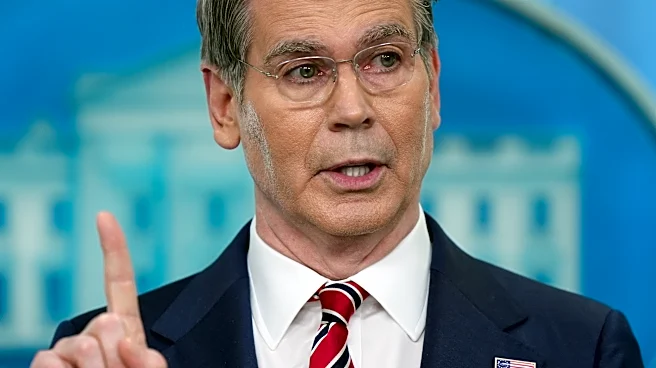
President Trump has addressed growing concerns regarding a series of deaths and disappearances of American scientists involved in critical research. These incidents, which have sparked widespread speculation online, involve individuals connected to advanced
scientific fields and defense projects. Despite the lack of concrete evidence linking these cases, Trump's comments have brought the issue to the forefront of national attention. The White House is currently investigating the matter, although no new evidence has been presented to suggest a coordinated threat. The narrative has gained traction on social media, fueled by the mysterious nature of the incidents and the high-profile status of the individuals involved.
Why It's Important?
The situation highlights a significant public anxiety about national security and the protection of key scientific and defense personnel. The deaths and disappearances of these scientists, although not proven to be connected, tap into fears about the U.S.'s ability to safeguard its technological and military edge. This concern is exacerbated by the global competition with countries like China and Russia, which are heavily investing in similar scientific domains. The narrative reflects a broader distrust in government institutions and the media, as the public seeks alternative explanations in the absence of clear information. This distrust can lead to the rapid spread of unverified theories, impacting public perception and policy discussions.
What's Next?
The White House's investigation into these incidents is ongoing, and further developments are expected as more information becomes available. Authorities may need to address the public's concerns more directly to prevent the spread of misinformation. Additionally, there may be calls for increased security measures to protect scientists working in sensitive fields. The situation could also prompt discussions about the role of social media in shaping public narratives and the need for responsible reporting. As the investigation progresses, it will be crucial for officials to provide transparent updates to maintain public trust and prevent further speculation.
Beyond the Headlines
The narrative surrounding the dead scientists underscores a deeper issue of cognitive bias and the human tendency to seek patterns, even in unrelated events. This inclination is amplified by the fragmented media landscape, where coherence is often prioritized over verification. The situation also raises ethical questions about the balance between public transparency and the protection of sensitive information. As the U.S. navigates its position in a competitive global landscape, ensuring the security of its scientific community will be vital for maintaining its strategic advantage. The ongoing discourse may lead to broader discussions about national security policies and the protection of intellectual assets.