






What's Happening?
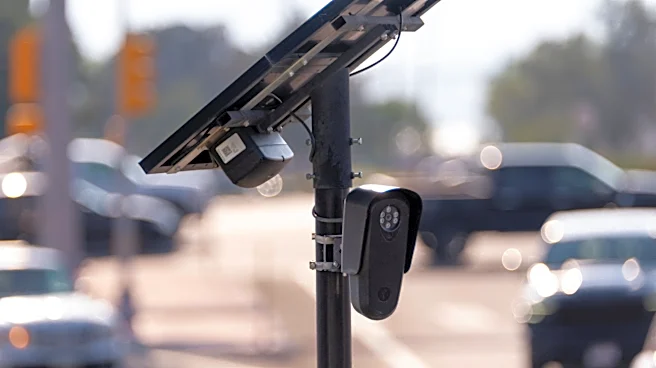
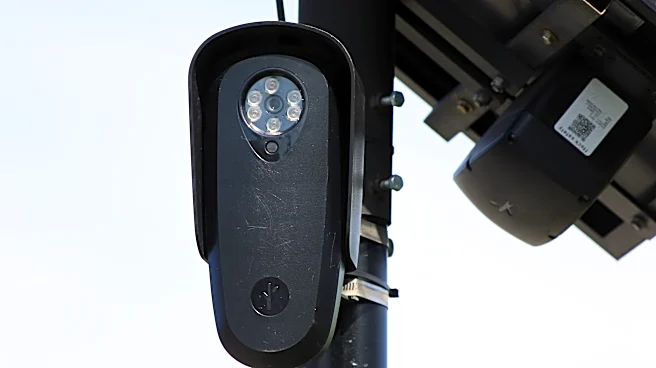
Hood County Constable John D. Shirley has issued a warning regarding the expanding networks of Flock automated license plate readers (LPRs), stating they could enable government agencies to create a searchable and shareable database of vehicle movements
nationwide. This concern follows Hood County's decision to unplug and cover its county-operated Flock cameras due to privacy and mass surveillance concerns raised by commissioners and residents. Shirley, a retired Houston Police Department sergeant, emphasized that while he supports technology assisting law enforcement, the issue arises when individual cameras become part of a larger, interconnected system. He questions whether the government is building a system capable of tracking everyone's movements rather than solely investigating individuals suspected of crimes. Flock, which markets its platform as a National LPR Network, claims that agencies control their data sharing and that its technology captures point-in-time images, not continuous tracking. The company recently changed its recommended default data retention period from 30 days to seven days and plans to implement mandatory case codes for law enforcement searches and Audit Assistance by the end of 2026.
Why It's Important?
This development is important because it highlights a growing debate in the U.S. concerning privacy rights versus law enforcement capabilities, particularly with the proliferation of surveillance technologies. The potential for a nationwide network of LPRs raises significant civil liberties concerns, as it could allow for the mass tracking of citizens' movements without specific suspicion. This could erode the expectation of privacy in public spaces and lead to a 'chilling effect' on freedom of assembly and expression. For law enforcement, such a network offers powerful tools for crime solving and prevention, but the lack of clear regulations and oversight could lead to misuse or overreach. The debate transcends traditional political lines, as both conservatives and liberals express concerns about government surveillance power. The actions taken by Hood County could set a precedent for other local governments to re-evaluate their use of LPR technology, potentially influencing policy decisions at state and federal levels regarding data retention, sharing, and accountability for surveillance systems.
What's Next?
Constable Shirley urges communities considering similar technology to thoroughly understand how these systems operate before widespread installation. He advises asking critical questions about data access, retention periods, sharing protocols, safeguards, and the consequences if those safeguards fail. This call to action suggests that more local governments and civil liberties groups may scrutinize LPR deployments and advocate for stricter regulations. The ongoing discussion around Flock's practices, including its recent adjustments to data retention and audit requirements, indicates that the company and other surveillance technology providers will likely face continued pressure to address privacy concerns. Future developments may include legislative efforts at state or federal levels to regulate the use of LPR data, potentially leading to standardized policies on data collection, storage, and access. Public awareness campaigns and legal challenges from privacy advocates are also probable, aiming to establish clearer boundaries for government surveillance in the digital age.
Beyond the Headlines
The controversy surrounding Flock cameras and similar surveillance technologies touches upon fundamental questions about the balance between security and liberty in a technologically advanced society. Beyond the immediate concerns of privacy, there are deeper implications regarding the potential for mission creep, where tools initially designed for specific law enforcement purposes are expanded to broader surveillance. The 'National LPR Network' concept, even with agency control over data sharing, could inadvertently create a de facto national database of movements, raising concerns about potential abuse, data breaches, and the creation of comprehensive profiles on individuals. The debate also highlights the ethical responsibility of technology companies to design systems with privacy by design principles and to be transparent about data handling. The long-term societal shift could involve a redefinition of what constitutes 'public' and 'private' in an era where every movement can be digitally recorded and analyzed, potentially leading to a more surveilled society where anonymity is increasingly rare. This ongoing tension will likely shape future legal frameworks and public discourse on technology's role in governance.