
What's Happening?
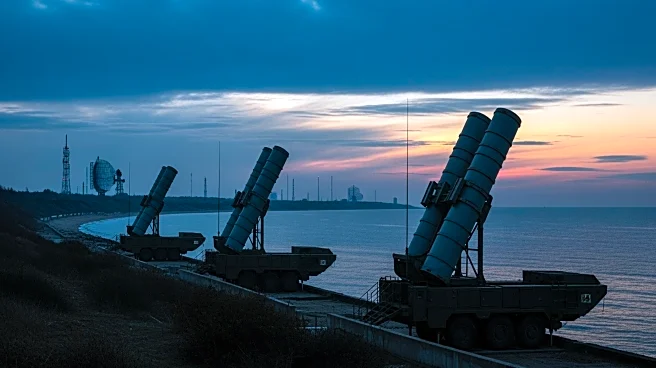
Taiwan's top security agency has revealed that Japan and the Philippines, both U.S. allies, are deploying anti-ship missiles in response to China's military expansion. This move is part of a broader strategy
to counter China's assertive territorial claims in the East China Sea, South China Sea, and Taiwan Strait. The U.S. has also been involved, deploying its Mid-Range Capability system to the Philippines and Japan for joint military exercises. These deployments have been met with strong condemnation from China, which views them as threats to regional stability.
Why It's Important?
The deployment of these missiles by U.S. allies highlights the growing military tensions in the Indo-Pacific region. As China continues to assert its territorial claims, neighboring countries are increasingly seeking to bolster their defenses. This situation underscores the strategic importance of the 'first island chain,' a series of islands viewed by the Pentagon as crucial for containing Chinese forces. The increased military presence in the region could lead to an arms race, further destabilizing the area and impacting global trade routes.
What's Next?
Looking forward, the Philippines plans to deploy BrahMos supersonic cruise missiles, while Japan is advancing its Hypersonic Glide Vehicles deployment. These developments suggest a continued escalation in military preparedness among U.S. allies in the region. The strategic positioning of these weapons systems is likely to provoke further diplomatic and military responses from China, potentially increasing the risk of conflict.