







What's Happening?
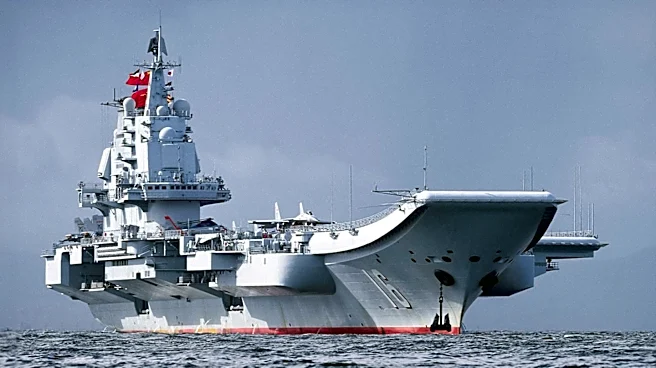
China is rapidly modernizing its military forces across all domains, posing an increasing threat to the U.S. military in the Western Pacific. The country's defense industrial base is producing ships, aircraft, tanks, and other military systems at a faster
rate than the United States, while also investing heavily in AI, quantum, and other defense-related technologies. Despite these advancements, some Chinese analysts and President Xi Jinping have identified a potential vulnerability referred to as 'peace disease,' stemming from China not having fought a major war since 1979. A report by the Center for Strategic and International Studies (CSIS) identifies potential weaknesses in the People's Liberation Army (PLA) at the operational level, including challenges in command, undersea capabilities, power projection and logistics, joint operations, corruption, and dynamic targeting. This analysis is based on extensive interviews with operators from the U.S., Japan, Australia, India, the Philippines, and other countries with direct experience with the PLA.
Why It's Important?
The rapid modernization of China's military, coupled with its increasing production capacity, has significant implications for global power dynamics and regional security, particularly for the United States and its allies. The identified weaknesses in the PLA, such as command and logistical challenges, offer potential avenues for the U.S. and its allies to strengthen deterrence and develop cost-imposing strategies. However, China's substantial investment in advanced technologies like AI and quantum computing could rapidly mitigate these weaknesses over time. The concept of 'peace disease' highlights a critical unknown regarding the PLA's actual combat effectiveness in a large-scale conflict, which could influence strategic calculations for all parties involved. The report's findings are crucial for policymakers in understanding the true capabilities and limitations of a rising military power, informing defense planning, and fostering alliances to counter potential threats in the Indo-Pacific region.
What's Next?
The U.S. and its allies are likely to continue monitoring China's military modernization closely, focusing on both its strengths and identified weaknesses. This will involve ongoing intelligence gathering, strategic assessments, and potentially increased joint military exercises to enhance interoperability and deterrence in the Western Pacific. Efforts to strengthen deterrence may include developing and deploying advanced military capabilities that exploit PLA weaknesses, such as anti-submarine warfare and improved command and control systems. Diplomatic engagements will also be critical to reinforce alliances and address regional security concerns. China, in turn, is expected to continue its military reforms and technological investments to overcome its operational challenges and enhance its overall combat readiness, potentially leading to a more robust and experienced military force in the coming years. The ongoing competition in defense industrial production and technological innovation will remain a key aspect of this dynamic.
Beyond the Headlines
Beyond the immediate military implications, China's rapid military modernization and the identified 'peace disease' raise broader questions about the nature of modern warfare and the psychological readiness of a military that has not experienced large-scale conflict in decades. The emphasis on technological superiority, while crucial, may not fully compensate for a lack of practical combat experience, which can impact decision-making under pressure, adaptability, and troop morale. This situation could lead to a strategic paradox: a technologically advanced military that is untested in real-world, high-intensity combat. Furthermore, the report's focus on internal PLA weaknesses, such as corruption, highlights systemic issues that could undermine even the most advanced military hardware. Understanding these deeper cultural and organizational factors is essential for a comprehensive assessment of China's military capabilities and for developing effective long-term strategies to maintain regional stability.