





What's Happening?
Pakistan's Deputy Prime Minister and Foreign Minister Ishaq Dar stated that deeper regional cooperation with Afghanistan is contingent upon the Taliban administration addressing the security concerns of neighboring countries, particularly the threat of terrorism.
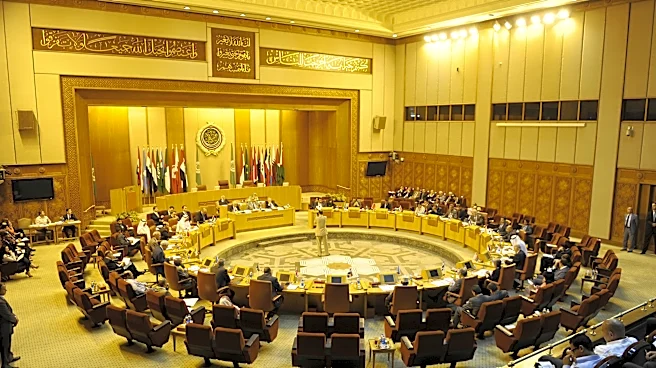
Speaking at a meeting of the Economic Cooperation Organization’s (ECO) Council of Ministers in Islamabad, Dar emphasized that a stable Afghanistan, integrated into the regional body and at peace with its neighbors, would benefit the Afghan people and the wider region through increased trade, transit, and economic cooperation. However, he stressed that meaningful progress requires Afghan authorities to tackle legitimate security concerns, especially terrorism. Pakistan frequently accuses Afghanistan's Taliban government of harboring militant groups responsible for attacks on Pakistani security forces and civilians, allegations Kabul denies.
Why It's Important?
This statement from Pakistan's Deputy Prime Minister and Foreign Minister highlights a critical geopolitical challenge in Central and South Asia. The linkage of regional economic cooperation to security commitments underscores the intertwined nature of stability, trade, and counter-terrorism efforts in the region. For the U.S., this dynamic is important as regional instability can have broader implications for international security and counter-terrorism efforts. The ongoing accusations between Pakistan and Afghanistan regarding militant activity indicate a persistent source of tension that could undermine efforts to foster economic development and connectivity. The U.S. has a vested interest in regional stability to prevent the resurgence of extremist groups and to support economic growth that could deter radicalization.
What's Next?
The Economic Cooperation Organization (ECO) is expected to discuss and adopt ECO Vision 2035, a 10-year framework focused on regional connectivity, economic integration, and sustainable growth. The success of this vision, particularly concerning Afghanistan, will largely depend on the Taliban administration's willingness and ability to address the security concerns raised by Pakistan and other neighboring countries. Future diplomatic engagements and bilateral discussions between Pakistan and Afghanistan will be crucial in determining whether a common ground can be found to facilitate deeper regional cooperation. The international community, including the U.S., will likely monitor these developments closely, as regional stability in this area has significant implications for global security and trade routes.
Beyond the Headlines
The demand from Pakistan for Afghanistan to address terrorism concerns reflects a broader regional struggle with extremist ideologies and cross-border militancy. This situation highlights the complex interplay of national sovereignty, regional security, and economic development. The U.S., having been deeply involved in Afghanistan for two decades, understands the challenges of counter-terrorism and the difficulties of achieving lasting peace in a region prone to instability. The current impasse between Pakistan and Afghanistan underscores the need for comprehensive regional strategies that go beyond military solutions, focusing on diplomatic engagement, economic incentives, and addressing the root causes of extremism. The long-term implications could include shifts in regional alliances and trade routes, impacting global supply chains and geopolitical influence.