






What's Happening?
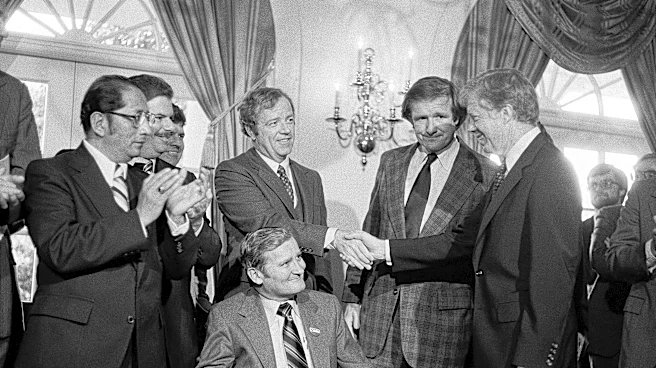
In a reflection on the current state of Congress, the leadership style of former U.S. Senator Philip Hart is highlighted as a model of effective statesmanship. Hart, who served from 1959 to 1976, was known for his integrity, bipartisan respect, and commitment
to fact-based legislation. He played a key role in advancing civil rights, consumer protection, and environmental policies. Hart's approach to politics was characterized by his willingness to listen, his openness to changing his mind, and his focus on long-term solutions over short-term political gains. His career is presented as a case study in quiet and effective leadership, offering a contrast to the current political climate.
Why It's Important?
Hart's leadership style is particularly relevant in today's polarized political environment. His ability to work across party lines and focus on substantive issues rather than partisan politics serves as a reminder of the potential for effective governance. Hart's emphasis on fact-based decision-making and his willingness to challenge his own party on critical issues highlight the importance of integrity and courage in political leadership. As Congress faces challenges in fulfilling its legislative and oversight responsibilities, Hart's example offers valuable lessons for current and future lawmakers.
Beyond the Headlines
Hart's legacy underscores the importance of statesmanship and the need for leaders who prioritize the public good over personal or party interests. His career demonstrates the impact that principled leadership can have on shaping policy and advancing societal progress. As political leaders navigate complex issues, Hart's approach to governance serves as a reminder of the potential for positive change through thoughtful and collaborative efforts.