







What's Happening?
The Thornton Quarry's stormwater reservoir, part of the Metropolitan Water Reclamation District's Tunnel and Reservoir Plan (TARP), is nearly full following severe storms on July 3 and July 4. As of July 11, the reservoir held 6.6 billion gallons of water,
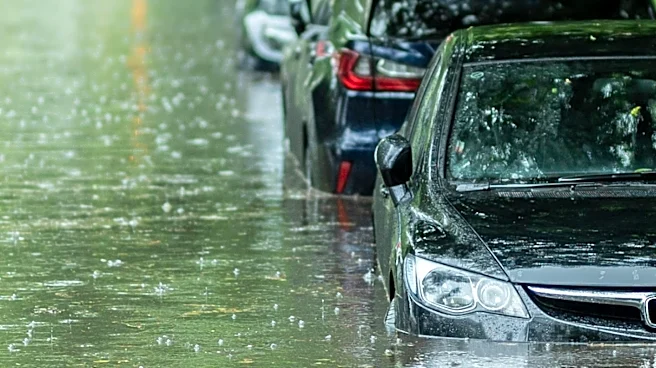
equating to 84% of its capacity. This system is designed to mitigate flooding by capturing excess stormwater that would otherwise inundate local waterways and sewer systems. The recent storms brought over 5 inches of rain, significantly impacting the Chicago region. Smaller stormwater detention basins in areas like Leavitt Park in Flossmoor and Orchard Park in Homewood also played a role in managing the floodwaters, although they are still in the process of receding. The Izaak Walton Preserve, which serves as both a nature preserve and a stormwater detention facility, remains inundated, with high water levels expected to take time to subside. Local authorities are actively engaged in cleanup efforts, with residents encouraged to place storm debris on parkways for collection.
Why It's Important?
The near-capacity status of the Thornton Quarry reservoir underscores the critical role of infrastructure in flood management, particularly in urban areas prone to heavy rainfall. The ability of the TARP system to capture and store billions of gallons of stormwater helps protect homes, businesses, and communities from potential flood damage. This event highlights the importance of maintaining and expanding such infrastructure to cope with increasingly severe weather patterns, potentially linked to climate change. The ongoing cleanup efforts and the need for additional federal funding to complete drainage systems in affected areas like Homewood emphasize the challenges local governments face in disaster preparedness and response. The situation also serves as a reminder of the vulnerability of urban areas to extreme weather events and the necessity for robust emergency management strategies.
What's Next?
As cleanup efforts continue, local authorities in Homewood and Flossmoor are working to clear storm debris and restore normalcy to affected areas. The Metropolitan Water Reclamation District will likely continue to monitor the reservoir's capacity closely, especially with the potential for future storms. The situation may prompt discussions on the need for additional funding and resources to enhance flood management infrastructure. Residents and local officials may advocate for federal support to complete unfinished drainage projects, which are crucial for improving the region's resilience to similar weather events in the future. The ongoing recovery efforts will also involve assessing the damage and implementing measures to prevent similar impacts from future storms.