

What's Happening?
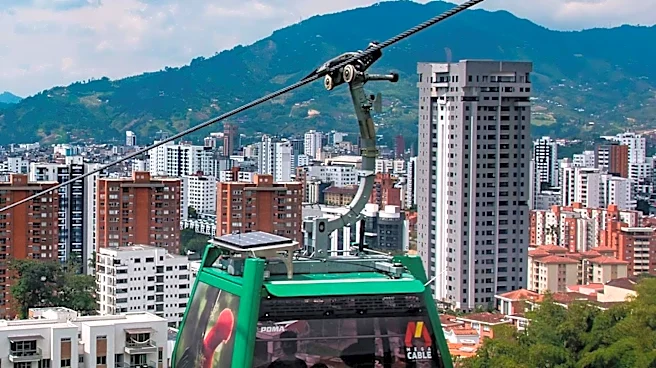
Madagascar's capital, Antananarivo, attempted to alleviate traffic congestion by implementing a cable car system. Promoted by former President Andry Rajoelina, the project aimed to transport thousands of commuters above the city's gridlock. However, the system faced
operational challenges, including power outages and high costs, leading to its suspension. The project, costing approximately $170 million, has been criticized for prioritizing over essential services like water and electricity. The cable cars remain unused, highlighting the difficulties in addressing urban transport needs in one of the world's poorest countries.
Why It's Important?
The failure of the cable car project in Antananarivo highlights the complexities of urban planning in rapidly growing cities, especially in developing countries. It underscores the importance of aligning infrastructure projects with the immediate needs of the population, such as affordable transportation and basic services. The situation reflects broader challenges faced by African cities experiencing rapid urbanization, where public transport systems are often underdeveloped. This case serves as a cautionary tale for policymakers and urban planners about the risks of implementing costly projects without ensuring their feasibility and alignment with public needs.
What's Next?
The future of the cable car system in Antananarivo remains uncertain. A transitional government, led by former army colonel Michael Randrianirina, has not announced plans for the project. The consortium that built the system has conducted inspections and submitted findings to the authorities, but no decisions have been made. The situation calls for a reassessment of urban transport strategies in Madagascar, considering the financial constraints and public sentiment. The government may need to explore alternative solutions that are more cost-effective and better aligned with the needs of the city's residents.