
What's Happening?
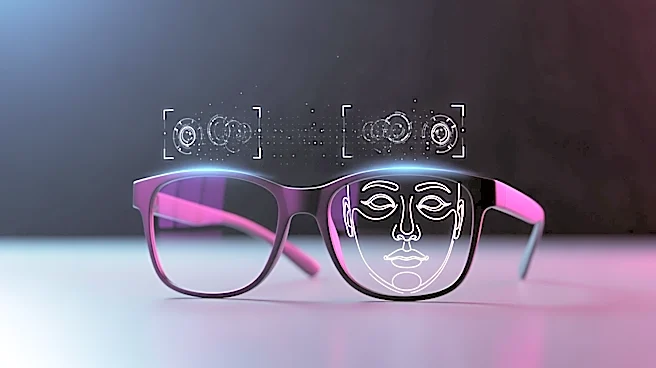
Meta has embedded facial recognition code into the software of its smart glasses, as revealed by an investigation by Wired and confirmed by the Electronic Frontier Foundation's Threat Lab. Although the feature
is not yet active for consumers, it exists within the Meta AI smartphone app. The feature, internally known as 'NameTag,' would allow the smart glasses to biometrically identify individuals in view and provide information about them to the wearer. This capability raises significant privacy concerns, as it involves creating unique biometric signatures, or 'faceprints,' that are stored and compared against a database on the user's phone.
Why It's Important?
The revelation of this facial recognition capability in Meta's smart glasses has significant implications for privacy and surveillance. The potential for widespread biometric tracking without consent could lead to increased scrutiny from privacy advocates and regulatory bodies. This development may also influence public perception of Meta and its products, potentially affecting consumer trust and sales. The situation highlights the ongoing debate over the ethical use of facial recognition technology and the need for clear guidelines and regulations to protect individual privacy rights.
What's Next?
Meta has stated that no final decisions have been made regarding the rollout of this feature, and any future implementation would be approached with transparency. However, the company may face pressure from privacy advocates and regulators to provide more detailed information about its plans and to ensure robust privacy protections are in place. The broader tech industry may also be impacted, as other companies developing similar technologies could be prompted to reevaluate their privacy policies and practices in response to public and regulatory concerns.
Beyond the Headlines
The potential activation of facial recognition in smart glasses could lead to a normalization of biometric surveillance in everyday life, raising ethical and legal questions about consent and data security. The technology could be misused for unauthorized surveillance or data breaches, posing risks to individual privacy and safety. This situation underscores the need for comprehensive legal frameworks to govern the use of biometric technologies and protect citizens' rights in the digital age.