




What's Happening?
A recent study published in 'Geoheritage' has identified numerous geological, geomorphological, and culturally significant sites across Kashmir with potential for geoheritage and sustainable geotourism development. Researchers, including Mohammad Irfan,
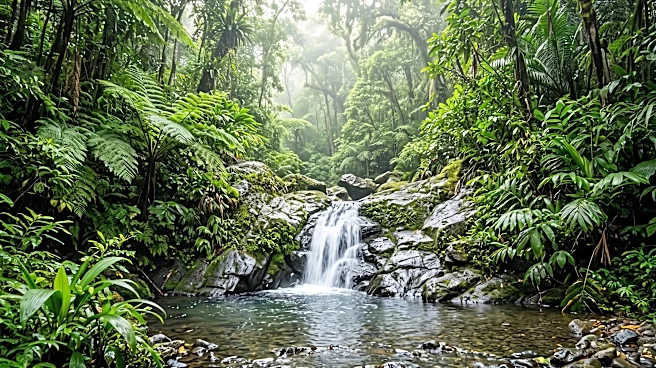
Ahsan Afzal, and Bikram Singh Bali from the University of Kashmir, along with international collaborators, describe Kashmir as a geologically and culturally diverse region situated between the Greater Himalayan and Pir Panjal ranges. The area features a complex combination of rock formations, tectonic structures, glaciers, lakes, river valleys, and Quaternary sediments, alongside historical and cultural landscapes. Key sites highlighted include the Balapur Fault, Chiranbal Meadow, Panzkoot and Aharbal waterfalls, major lakes like Dal and Wular, and the globally significant Permian–Triassic boundary at Guryul Ravine. The study emphasizes that Kashmir serves as a natural laboratory for understanding Himalayan tectonic activity, landscape evolution, and past environments, offering opportunities for scientific research, education, and geotourism. However, it also notes that geoheritage conservation in Kashmir has received limited attention, leading to deterioration of some sites and inadequate awareness of their significance.
Why It's Important?
The development of geotourism in Kashmir, as proposed by the study, could significantly impact the region's economy and global scientific community. By leveraging its unique geological and cultural assets, Kashmir could attract a new segment of international tourists interested in natural history and earth sciences. This initiative could create new economic opportunities, particularly in remote areas, through sustainable tourism practices that involve local communities. Increased tourism could lead to job creation, infrastructure development, and a boost to local businesses. Furthermore, the recognition of sites like Guryul Ravine for their global scientific importance could elevate Kashmir's profile as a hub for geological research and education, fostering international collaborations and knowledge exchange. The study's emphasis on conservation alongside tourism development is crucial for preserving these invaluable natural resources for future generations, ensuring that economic gains do not come at the expense of environmental degradation.
What's Next?
The study proposes that the Guryul Ravine Permian–Triassic section be considered for international geopark status and that the region's geological and cultural attractions be integrated into a unified geoheritage and geotourism framework. This would involve strengthening scientific education, conservation awareness, and sustainable tourism practices. The researchers advocate for community engagement, environmental stewardship, and economic sustainability as core components of any future initiatives. The Jammu and Kashmir Department of Geology and Mining has already designated the Guryul Ravine fossil zone as a protected area, and the Tourism Department has acquired land for its preservation. Further steps would likely involve detailed planning, investment in eco-friendly infrastructure, and marketing efforts to attract geotourists. Collaboration between local authorities, scientific institutions, and international organizations will be essential to realize Kashmir's full potential as a global geotourism destination.
Beyond the Headlines
Beyond the immediate economic and scientific benefits, the development of geotourism in Kashmir could foster a deeper appreciation for the region's natural and cultural heritage among both locals and visitors. By presenting geological landscapes alongside cultural heritage, the initiative aims to highlight the intrinsic connection between Kashmir's environment and its communities. This integrated approach could promote a sense of pride and ownership among the local population, encouraging their active participation in conservation efforts. Moreover, the focus on sustainable tourism could serve as a model for other regions facing similar challenges of balancing economic development with environmental protection. The long-term success of this endeavor hinges on effective policy implementation, sustained funding, and a commitment to involving all stakeholders, ensuring that the benefits are widely distributed and the natural beauty of Kashmir is preserved.