








What's Happening?
A Colorado Springs School District 11 teacher, Stacy Adair, who was previously named 'Teacher of the Year' by the Teacher Freedom Alliance, received a reprimand for wearing a T-shirt depicting the biological chromosomal symbols XX followed by 'does not
equal' and then XY. The incident occurred during a teachers-only day at her elementary school on August 6, prior to students returning for the fall semester. Adair stated she did not believe the shirt was contentious, considering it 'biologically factual' and part of her regular wardrobe. A week later, she was verbally rebuked and instructed not to wear the shirt again. The school district, while not commenting on specific personnel matters, referenced its policy on employee attire, which states clothing should not disrupt the educational environment and applies consistently without regard to viewpoint. Adair was informed that someone had reported her to Safe2Tell, an anonymous hotline, with murmurs suggesting the shirt was 'anti-transgender.' Adair maintains her shirt is 'not anti-anything' and simply states facts.
Why It's Important?
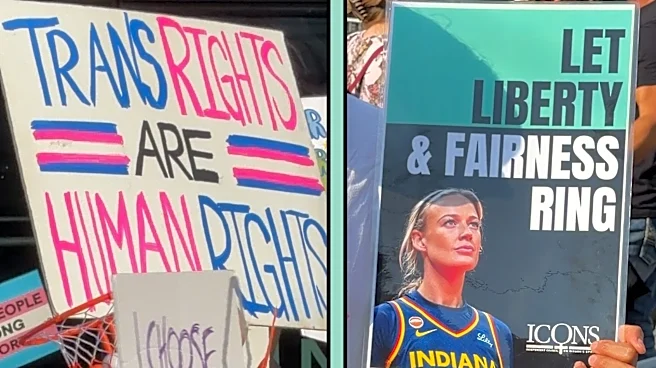
This incident highlights the ongoing national debate surrounding gender identity, biological sex, and freedom of expression within educational settings, particularly in the context of public schools. The controversy reflects broader societal tensions regarding LGBTQ+ rights and the role of educators in discussing or displaying views on such topics. The school district's policy, which aims to prevent disruption to the educational environment, is being tested against an employee's assertion of factual biological representation. This situation could influence how school districts nationwide interpret and enforce dress code policies for staff, especially concerning expressions related to sensitive social issues. The involvement of the Safe2Tell hotline also underscores the mechanisms available for reporting perceived inappropriate conduct, which can sometimes be used in disputes over ideological differences. The case also draws parallels to recent events, such as the WNBA's apology for asking fans to cover similar shirts, indicating a wider struggle to balance individual expression with community standards and inclusivity.
What's Next?
While the school district has not specified further actions beyond the reprimand and instruction not to wear the shirt again, the incident could lead to continued discussion and potential challenges regarding employee dress codes and freedom of speech in Colorado Springs School District 11. Adair's stance that the shirt is 'biologically factual' and 'not anti-anything' suggests she may continue to advocate for her right to wear such attire, potentially leading to further disciplinary actions or legal challenges. The Teacher Freedom Alliance, which recognized Adair for her 'bold, student-first leadership,' may also offer support or amplify her case, further nationalizing the issue. The district's emphasis on creating professional school environments centered on teaching and learning will likely guide its future responses, but the underlying tensions between individual expression and perceived disruption are unlikely to dissipate quickly. This event may also prompt other school districts to review and clarify their own policies on employee attire and expressions of personal beliefs.
Beyond the Headlines
The controversy surrounding Stacy Adair's T-shirt delves into deeper implications concerning the intersection of scientific understanding, social identity, and educational policy. The shirt's message, 'XX ≠ XY,' while presented by Adair as a biological fact, is perceived by some as a statement against transgender individuals, particularly in the context of ongoing debates about transgender participation in sports. This highlights a fundamental disagreement over whether biological sex is the sole determinant of gender identity, a complex issue with scientific, ethical, and social dimensions. The incident also raises questions about the 'neutrality' of public education and whether educators should be allowed to express views that might be seen as exclusionary or controversial by certain student populations or their families. The 'Teacher of the Year' award from the Teacher Freedom Alliance suggests a growing movement among educators who prioritize certain interpretations of freedom and fact, potentially setting the stage for more such confrontations in schools across the country as cultural and scientific understandings of gender continue to evolve.