




What's Happening?
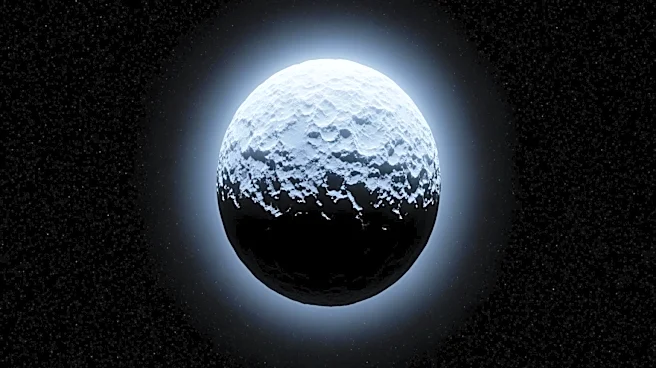
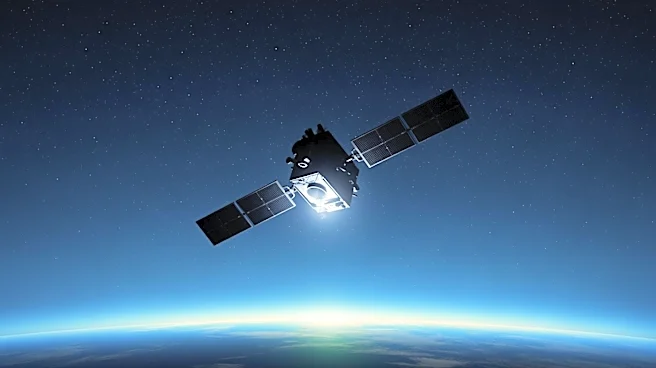
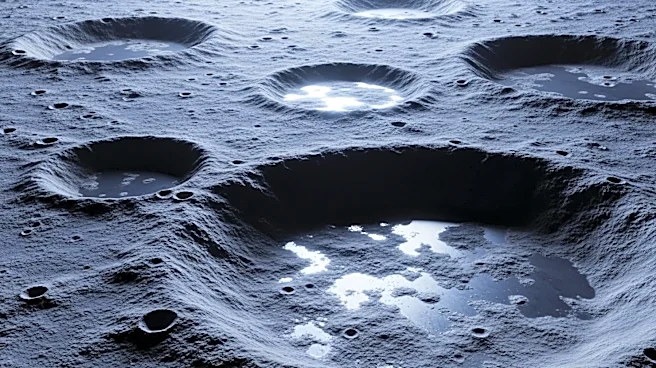
The Chandrayaan-2 mission has used its Dual Frequency Synthetic Aperture Radar to identify subsurface ice in doubly shadowed craters at the Moon's poles. These craters, located within permanently shadowed regions, provide ideal conditions for preserving
ice due to their extremely low temperatures, reaching around 25 K. The radar data revealed circular polarization ratio values greater than 1 in four craters, indicating the presence of subsurface ice. This discovery is significant for future lunar exploration, as it suggests potential in situ resources for supporting crewed missions and establishing lunar outposts.
Why It's Important?
The identification of subsurface ice in lunar craters is a crucial step in understanding the Moon's resource potential. Water-ice is a vital resource for future lunar missions, providing not only drinking water but also the potential for fuel production through electrolysis. The presence of ice could significantly reduce the cost and complexity of sustaining human presence on the Moon. This discovery also enhances our understanding of the Moon's geological history and the processes that have preserved ice over billions of years. The findings could influence future mission planning and the development of lunar infrastructure.