






What's Happening?
Nate Kauffman, Senior Vice President and Omaha branch executive with the Federal Reserve Bank (FRB) of Kansas City, recently visited Standing Bear Focus Program students to share insights on local and national economics. Kauffman, who also serves as executive director
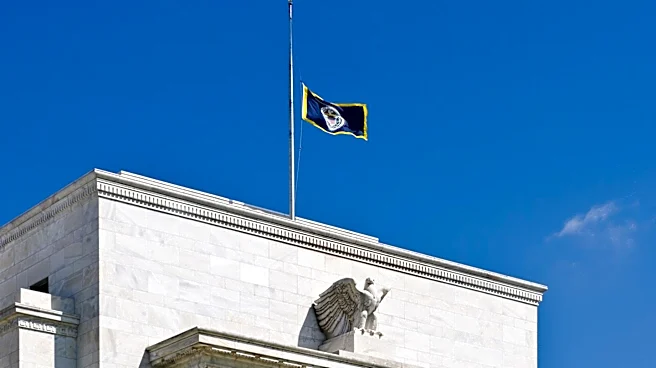
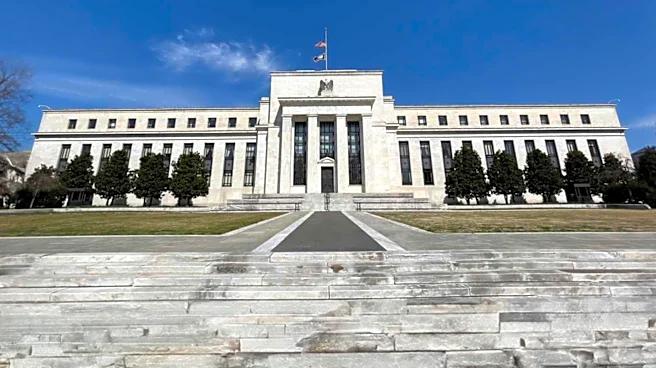
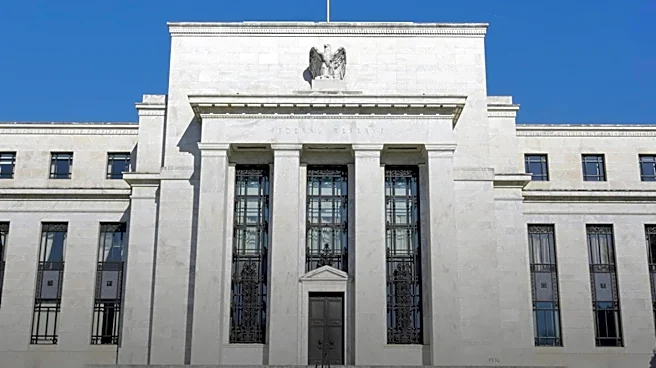
of the FRB of Kansas City’s Center for Agriculture and the Economy, spoke to over 40 students in Macroeconomics and Intro to Financial Accounting courses. His 40-minute presentation covered the Federal Reserve's role in the economy, his job responsibilities, and potential careers in business and economics. Students like Olivia and Calvin expressed gaining valuable knowledge about the Federal Reserve's functions and the broader economic landscape. The Federal Reserve, established by the Federal Reserve Act of 1913, acts as the central bank of the United States, promoting financial stability, setting monetary policies, and supervising financial institutions.
Why It's Important?
This educational outreach by a Federal Reserve executive is crucial for fostering economic literacy among young people. By directly engaging with students, Kauffman helps demystify the complex functions of the Federal Reserve and its impact on daily life and the national economy. This initiative can inspire students to pursue careers in economics and finance, providing them with a clearer understanding of the skills and mindset required for such fields. For the Federal Reserve, these interactions are vital for public engagement and transparency, ensuring that future generations understand the institution's role in maintaining financial stability and economic health. It also highlights the importance of practical insights from industry leaders in supplementing academic learning, preparing students for future economic decisions and career paths.
What's Next?
Nate Kauffman plans to continue his educational outreach efforts, recognizing the importance of informing students about the Federal Reserve and its impact on their lives. These visits also aim to stimulate conversations about personal finance and resource management among students. The University of Nebraska-Lincoln College of Business, which helped arrange this visit, may continue its affiliation with such focus programs to facilitate similar educational opportunities. Students like Calvin and Olivia, now equipped with a better understanding of the Federal Reserve and economic principles, will proceed with their college and career planning, potentially pursuing studies in business, accounting, pre-law, or international business, influenced by the insights gained from Kauffman's presentation.
Beyond the Headlines
The engagement of Federal Reserve officials with high school students underscores a broader societal need for improved financial and economic education. In an increasingly complex global economy, understanding the functions of central banks and monetary policy is vital for informed citizenship and sound personal financial decision-making. These interactions can help bridge the gap between theoretical economic concepts taught in classrooms and their real-world applications, making economics more tangible and relevant for students. Furthermore, by showcasing diverse career paths within economics and finance, such initiatives can encourage a broader range of students to consider these fields, potentially leading to a more diverse and inclusive financial sector in the future. It also highlights the Federal Reserve's commitment beyond its core functions to public education and community engagement.