


What's Happening?
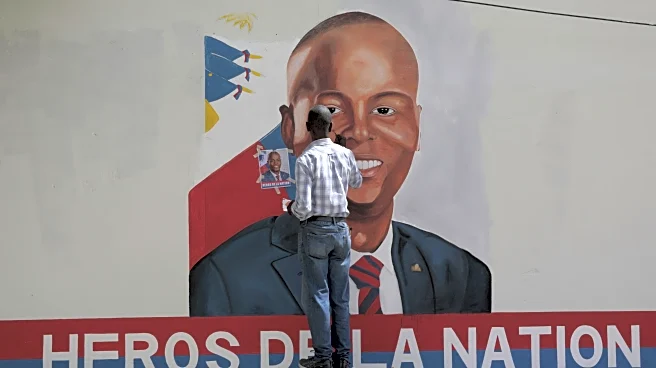
Jury selection is set to commence in the U.S. federal trial of four men accused of conspiring to assassinate Haitian President Jovenel Moïse in 2021. The defendants, Arcangel Pretel Ortiz, Antonio Intriago, Walter Veintemilla, and James Solages, face
charges related to plotting in South Florida to kidnap or kill Moïse. They have pleaded not guilty and could face life sentences if convicted. The trial, initially scheduled for the previous year, was delayed due to discovery challenges and the large volume of evidence. The assassination involved about two dozen foreign mercenaries, mostly from Colombia, who attacked Moïse's home, resulting in his death and injuries to his wife, Martine. The plot was allegedly orchestrated in South Florida, with plans to replace Moïse with a leader favorable to the conspirators.
Why It's Important?
The trial highlights the international dimensions of political violence and the complexities of prosecuting such cases in the U.S. It underscores the challenges in addressing transnational criminal activities and the role of U.S. jurisdictions in prosecuting crimes with international implications. The case also reflects on the broader issues of political instability in Haiti and the involvement of foreign actors in its internal affairs. The outcome of the trial could have significant implications for U.S.-Haiti relations and the international community's approach to political violence and assassination plots.
What's Next?
As the trial progresses, it will be crucial to monitor the legal proceedings and the evidence presented. The trial's outcome could influence future legal strategies in similar international cases. Additionally, the trial may prompt discussions on international cooperation in criminal investigations and the role of the U.S. in addressing political violence abroad. The case could also lead to increased scrutiny of the involvement of foreign nationals in political plots and the measures needed to prevent such incidents.