



What's Happening?
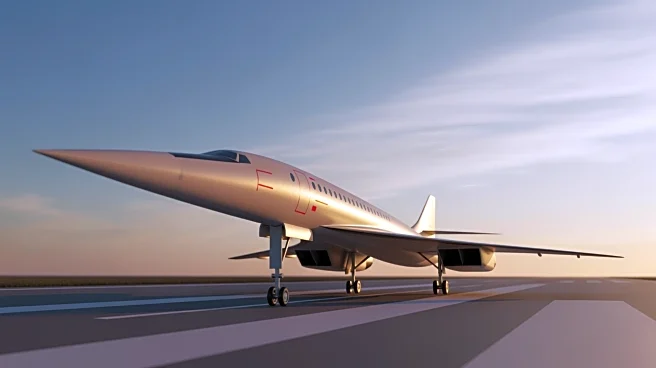
NASA's X-59 quiet supersonic research aircraft has commenced its first flight as part of the Quesst mission, marking a significant milestone in NASA's aeronautics research. The flight took place on October 28, 2025, at U.S. Air Force Plant 42 in Palmdale,
California. This event initiates the flight testing phase for the Quesst mission, which aims to explore the benefits of new aeronautical technologies. The Flight Demonstrations and Capabilities (FDC) project, responsible for this initiative, conducts integrated small-scale flight research to validate technological advancements. The project collaborates with academia, industry, and government organizations to leverage flight opportunities and engages with NASA researchers and university students to bring innovative concepts to flight.
Why It's Important?
The commencement of flight testing for NASA's X-59 aircraft is crucial for advancing supersonic travel technology. The Quesst mission seeks to demonstrate the feasibility of quiet supersonic flight, which could revolutionize air travel by significantly reducing flight times without the disruptive sonic booms associated with traditional supersonic aircraft. This research has the potential to impact the aviation industry by paving the way for commercial supersonic flights, offering faster travel options and enhancing global connectivity. Additionally, the collaboration between NASA, academia, and industry fosters innovation and supports the development of cutting-edge aeronautical technologies.
What's Next?
Following the initial flight, NASA will continue rigorous testing of the X-59 aircraft to assess its performance and validate the benefits of the technologies involved. The FDC project will support all phases of technology maturation, ensuring that the aircraft meets safety and efficiency standards. Future tests will focus on integrating flight test capabilities and assets from NASA, other government agencies, and industry partners. The outcomes of these tests will inform the development of commercial supersonic aircraft, potentially leading to regulatory changes and new market opportunities in the aviation sector.
Beyond the Headlines
The X-59's flight testing represents a broader shift towards sustainable and efficient air travel. By addressing the environmental and noise concerns associated with supersonic flight, NASA's research could lead to more eco-friendly aviation solutions. The project's emphasis on collaboration and innovation highlights the importance of interdisciplinary approaches in tackling complex aeronautical challenges. As the aviation industry seeks to reduce its carbon footprint, the success of the Quesst mission could inspire further research into alternative propulsion systems and materials that enhance aircraft performance while minimizing environmental impact.