
What's Happening?
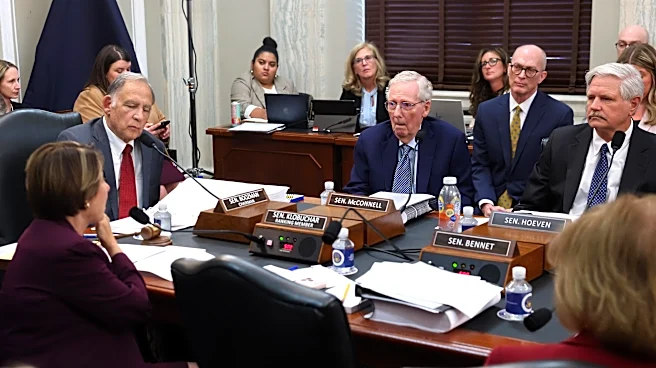
Members of the Indiana Congressional delegation, including Rep. Frank J. Mrvan, Rep. Jim Baird, Senator Todd Young, and Senator Jim Banks, have sent a letter to the National Oceanic and Atmospheric Administration
(NOAA). The letter supports the State of Indiana’s request to establish a National Estuarine Research Reserve (NERR) in Northwest Indiana, specifically along the coastal region bordering Lake Michigan. This initiative builds upon Indiana's existing partnership with NOAA through the Indiana Lake Michigan Coastal Program, which has been active since 2001. The proposed NERR aims to enhance conservation, research, education, and habitat restoration efforts in the region. Purdue University's College of Agriculture is positioned to lead this initiative, leveraging its expertise and existing NOAA-funded programs like the Illinois-Indiana Sea Grant College Program and the Midwestern Regional Climate Center. The delegation emphasizes the unique freshwater estuarine habitats in the region, which currently lack a dedicated NERR, and highlights the potential for addressing research gaps and advancing scientific understanding of the Great Lakes ecosystem.
Why It's Important?
The establishment of a National Estuarine Research Reserve in Northwest Indiana holds significant importance for both environmental conservation and economic development in the region. Lake Michigan is identified as a crucial natural resource, vital to Indiana's identity, economy, and environment. A NERR designation would provide valuable support and recognition for ongoing conservation efforts, expanding opportunities for research, education, and community engagement. This would safeguard the vital environmental resource for future generations and contribute to the long-term vitality, restoration, and resilience of the Lake Michigan coastal region. Economically, the designation could attract funding and resources, fostering job creation and sustainable tourism. Furthermore, by addressing research gaps in freshwater estuarine habitats, the NERR would contribute distinct value to the overall National Estuarine Research Reserve system, enhancing management and restoration efforts across the Great Lakes bioregion.
What's Next?
The Indiana Congressional delegation is urging NOAA to advance the State's request through the appropriate designation process and provide an update on its status. The formal request for designation was initially submitted by then-Governor Eric Holcomb in November 2024, and reaffirmed by Governor Mike Braun in July 2026. The next steps involve NOAA's review of the proposal, which will likely include evaluating the scientific merit, community support, and potential benefits of establishing a NERR in Northwest Indiana. If approved, the designation would pave the way for increased federal funding and collaborative efforts with Purdue University and other stakeholders to implement the reserve's programs. The outcome of NOAA's decision will determine the future of enhanced conservation and research initiatives along Indiana's Lake Michigan shoreline.
Beyond the Headlines
The push for a National Estuarine Research Reserve in Northwest Indiana reflects a broader national trend towards recognizing and protecting critical ecological zones, particularly those with unique characteristics like freshwater estuaries. This initiative highlights the increasing collaboration between federal agencies, state governments, and academic institutions in addressing complex environmental challenges. The involvement of Purdue University, a land-grant institution with established NOAA-funded programs, underscores the growing role of scientific research and education in informing and driving conservation policy. The potential NERR could serve as a model for other Great Lakes states seeking to enhance their coastal management strategies, fostering a more integrated approach to regional environmental stewardship. This effort also speaks to the long-term vision of preserving natural resources not just for ecological balance, but also for their intrinsic value and the economic opportunities they provide to local communities.