





What's Happening?
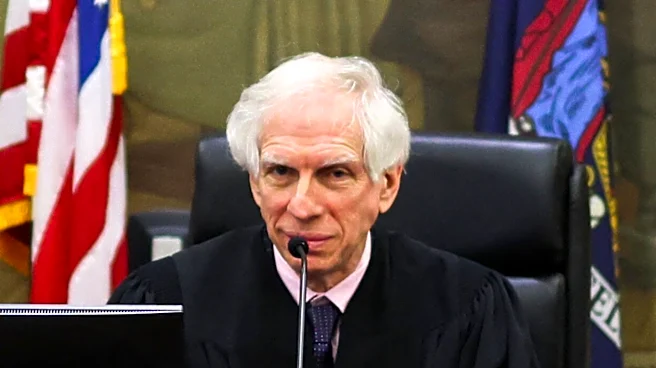
A military judge has ruled to suppress the confession made by Khalid Sheikh Mohammed, the alleged mastermind of the September 11th attacks, to FBI agents nearly two decades ago. The judge, Lt. Col. Michael Schrama, determined that the confession was not
given voluntarily. This decision is a significant setback for the federal government's prolonged efforts to prosecute Mohammed, who is currently detained at Guantanamo Bay, Cuba, alongside other defendants awaiting trial. The suppressed statements were made during a four-day interrogation by the FBI in January 2007. Prior to this, Mohammed had been held and interrogated by the CIA, where he was subjected to waterboarding and other tactics widely considered torture. These earlier interrogations led his legal team to challenge the admissibility of his subsequent statements to the FBI. The judge found that the CIA's treatment instilled a fear in Mohammed that compelled him to comply with interrogators. Furthermore, he was not issued a Miranda warning, which would have informed him of his right to remain silent, nor was he permitted to consult with a lawyer.
Why It's Important?
This ruling has profound implications for the ongoing legal proceedings at Guantanamo Bay and raises critical questions about the use of evidence obtained under duress. The suppression of Khalid Sheikh Mohammed's confession could significantly complicate the prosecution's case, potentially leading to further delays or even impacting the viability of a conviction. It underscores the long-standing debate surrounding the methods of interrogation employed by U.S. intelligence agencies post-9/11 and their legal ramifications. The decision highlights the judiciary's role in upholding due process, even for individuals accused of heinous crimes, and reinforces the principle that confessions must be voluntary to be admissible. This development could also reignite discussions about the future of the Guantanamo Bay detention center and the military commission system, which has faced criticism for its slow pace and legal complexities. For victims and their families, this ruling may prolong the wait for justice and closure, while for civil liberties advocates, it represents a crucial affirmation of legal rights.
What's Next?
The prosecutor in Khalid Sheikh Mohammed's case, Rear Adm. Aaron C. Rugh, has indicated that the government will decide whether to appeal the judge's decision in the near future. An appeal would likely prolong the legal process even further, potentially pushing the trial date beyond the currently scheduled June 2028. If the suppression stands, the prosecution will need to re-evaluate its strategy, potentially relying on other evidence or pursuing alternative legal avenues. This could involve a more extensive focus on evidence not derived from the contested confessions. The ruling may also prompt renewed calls from human rights organizations and international bodies for a re-examination of past interrogation practices and the conditions at Guantanamo Bay. The long-term implications for the military commission system, designed to try high-profile terrorism suspects, will also be closely watched, as this decision could set a precedent for other cases involving similar circumstances.
Beyond the Headlines
The suppression of Khalid Sheikh Mohammed's confession delves into the complex ethical and legal landscape of national security and human rights. It brings to the forefront the tension between the imperative to prosecute alleged terrorists and the commitment to constitutional principles, particularly the prohibition against coerced confessions. The use of 'enhanced interrogation techniques,' widely condemned as torture, has cast a long shadow over these cases, raising questions about the moral authority of the U.S. and the integrity of its justice system. This ruling implicitly acknowledges the lasting impact of such methods on legal proceedings and the difficulty of disentangling evidence obtained under duress. It also highlights the broader societal debate about how a democratic nation should respond to terrorism without compromising its fundamental values. The ongoing legal battles at Guantanamo Bay serve as a continuous reminder of the challenges in balancing security concerns with the rule of law, and the long-term consequences of decisions made in the immediate aftermath of a crisis.