






What's Happening?
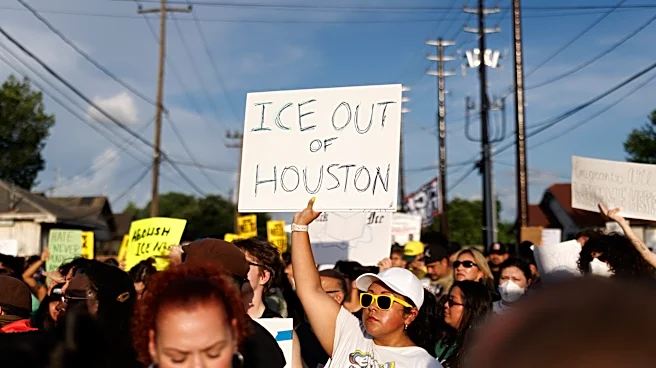
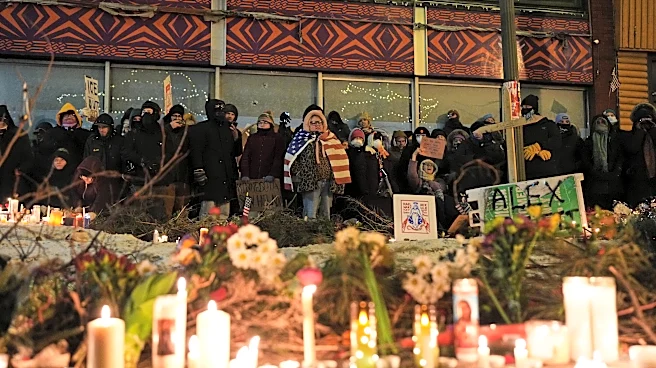
The Trump administration has charged 15 Minneapolis protesters, known as the 'Minnesota 15', with conspiracy for their involvement in resisting Immigration and Customs Enforcement (ICE) operations. These charges are linked to their coordination with rapid
response groups to alert communities about ICE activities and organizing blockades at the city's ICE headquarters. The protesters are associated with Direct Action MN, a group providing community defense during ICE's Operation Metro Surge, which was the largest immigration operation in U.S. history. The administration has labeled the group as affiliated with 'antifa', a decentralized anti-fascism movement, which it designated as a domestic terror organization. The charges have sparked controversy, with local organizers and legal experts viewing them as an attempt to criminalize resistance and suppress dissent.
Why It's Important?
This case highlights the ongoing tension between federal immigration enforcement and local community resistance. The charges against the Minnesota 15 are part of a broader pattern of using conspiracy laws to target protest movements, particularly those associated with 'antifa'. The outcome of this case could set a precedent for how similar protests are handled in the future, potentially impacting the rights of individuals to organize and protest against government actions. The charges also reflect the Trump administration's aggressive stance on immigration and its efforts to curb opposition through legal means. This situation underscores the broader national debate on immigration policy, civil liberties, and the role of protest in a democratic society.
What's Next?
The legal proceedings against the Minnesota 15 will continue, with potential implications for other protest movements across the country. The defendants face significant legal challenges, including the possibility of enhanced sentencing if terrorism charges are pursued. The case may also influence future government strategies in dealing with protest groups, particularly those labeled as 'antifa'. As the trial progresses, it is likely to attract national attention and could prompt further protests and public discourse on the balance between national security and civil rights.
Beyond the Headlines
The use of conspiracy charges in this context raises questions about the limits of free speech and assembly in the U.S. The case also highlights the increasing use of surveillance and digital evidence in prosecuting protest activities, raising concerns about privacy and the potential for government overreach. The broader implications of this case may affect how protest movements organize and communicate, particularly in an era of heightened digital surveillance.