
What's Happening?
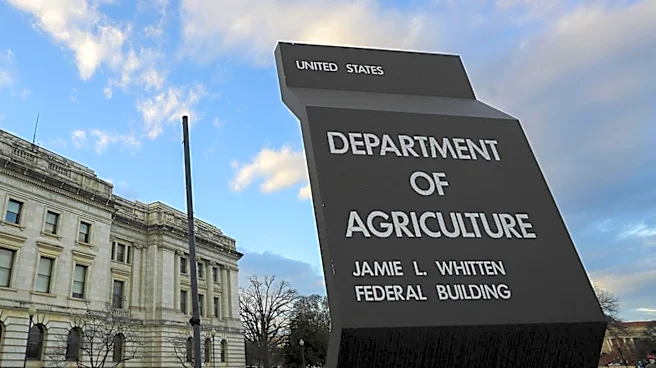
The U.S. Department of Agriculture (USDA) has initiated a new pilot program called 'Farmer First, Field Focused.' This program aims to enhance support for farmers by strengthening conservation planning
and simplifying the process for obtaining financial assistance. The pilot has been introduced in Hawaiʻi and eight other states. Its core principle is to prioritize conservation planning before financial aid is disbursed. Farmers will engage in one-on-one consultations with officials to develop conservation plans tailored to their specific natural resource concerns and objectives. To improve efficiency, technical staff will concentrate solely on conservation planning, while program specialists will manage contracts, payments, and administrative duties. This division of labor is expected to allow field office staff to dedicate more time to on-the-ground technical assistance, ultimately leading to more informed and transparent conservation planning and financial assistance for producers.
Why It's Important?
This USDA pilot program is crucial for the future of sustainable agriculture in the U.S. By streamlining processes and emphasizing farmer-centric planning, it addresses long-standing challenges producers face in accessing conservation resources. The program's focus on individualized conservation plans ensures that solutions are practical and effective for specific farm operations, promoting better environmental stewardship. The anticipated savings of over 400,000 hours and the redirection of nearly 1.4 million hours towards field work signify a substantial increase in direct support for farmers. This shift will not only improve the efficiency of conservation efforts but also foster greater trust and collaboration between farmers and the USDA, ultimately contributing to the long-term health of agricultural lands and natural resources across the participating states.
What's Next?
As part of the 'Farmer First, Field Focused' pilot, Hawaiʻi and the other participating states will establish and communicate funding priorities, incorporating input from state and local stakeholders. The current ranking process for applications will be replaced with a new, streamlined evaluation system designed to increase transparency and reduce complexity. This change is expected to provide farmers with clearer expectations regarding how their applications are assessed. Producers can anticipate less paperwork, more defined timelines, and quicker decisions on funding. The USDA projects that this pilot will save over 400,000 hours, repurpose nearly 1.4 million hours for higher-value field work, and reallocate $3 million to locally led conservation priorities, indicating a significant shift in how conservation efforts are managed and funded.
Beyond the Headlines
The 'Farmer First, Field Focused' pilot represents a significant philosophical shift in how the USDA approaches conservation. By placing the farmer's needs and on-the-ground realities at the forefront, the program acknowledges that effective conservation is best achieved through collaborative, tailored solutions rather than a one-size-fits-all approach. This initiative could lead to a more resilient agricultural sector, better equipped to adapt to environmental challenges and market demands. The emphasis on reducing administrative burden and increasing direct field support also reflects a broader recognition of the value of practical, hands-on engagement. This model has the potential to foster a more sustainable and productive agricultural landscape, benefiting both farmers and the environment in the long run.