





What's Happening?
The Paris Agreement, established in 2015, has significantly influenced global climate action, leading to a substantial increase in investments in renewable energy. According to Felix Wertli, head of the Swiss delegation at COP31, and Patrick Hofstetter,
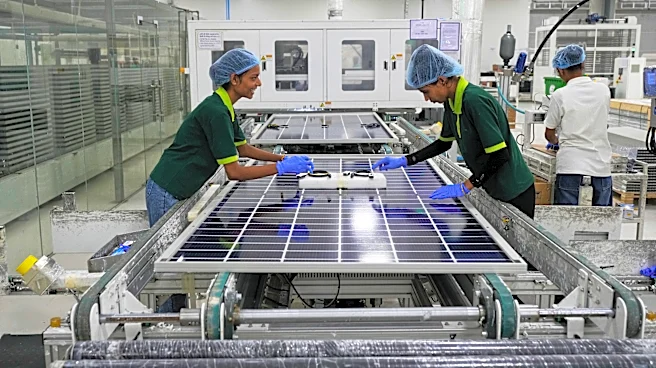
a climate expert at WWF Switzerland, the agreement was a decisive step as it encouraged poorer countries to commit to climate protection. Before the Paris Agreement, the world was projected to face four degrees of warming, a forecast that has since improved. Currently, global investments in renewable energy exceed $2 trillion per year, a development largely attributed to the Paris Agreement. The accord aimed to limit global warming to 1.5°C above pre-industrial levels, a target that scientists warn is crucial to avoid severe climate impacts such as heatwaves, droughts, and floods. Despite the progress, the world is still expected to overshoot this 1.5°C limit, with current policies potentially leading to a 2.8°C rise by 2100, and even optimistic scenarios projecting 1.7-1.8°C by mid-century.
Why It's Important?
The Paris Agreement's impact on global renewable energy investment is critical for the U.S. and the global economy. The surge in over $2 trillion annually in renewable energy investments signifies a major shift in global capital allocation, creating new markets and job opportunities in green technologies. For the U.S., this trend can foster innovation, enhance energy independence, and reduce reliance on fossil fuels, aligning with broader climate goals. The commitment of poorer countries to climate protection, facilitated by the agreement, broadens the global effort, making climate action more effective and equitable. This collective action is essential because climate change impacts, such as extreme weather events, transcend national borders and can disrupt global supply chains, trade, and economic stability. While the U.S. has seen fluctuating commitment to international climate agreements, the global momentum driven by the Paris Agreement underscores the economic and environmental imperative for continued investment in sustainable solutions. The potential for overshooting the 1.5°C warming limit highlights the urgency for all nations, including the U.S., to accelerate their transition to a low-carbon economy to mitigate severe economic and social consequences.
What's Next?
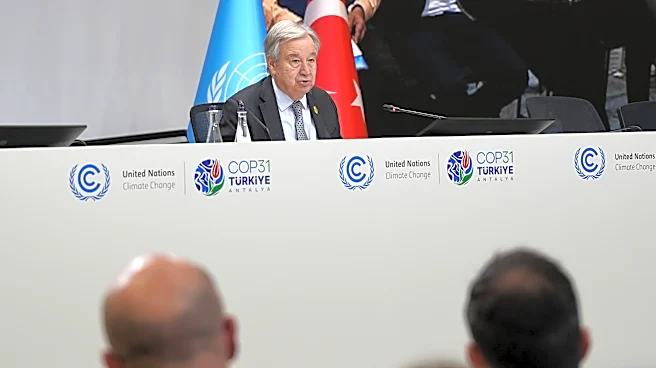
Despite the progress, the world is still on track to exceed the 1.5°C warming limit, necessitating accelerated action. Experts like Anthony Patt, a climate scientist at ETH Zurich, emphasize the need for a rapid phase-out of oil and gas, alongside continued growth in solar power and electric vehicles. The upcoming COP31 United Nations Climate Change Conference in Antalya, Turkey, is expected to focus on new initiatives, particularly accelerating electrification to cut emissions and strengthen long-term energy security. A critical aspect of future efforts will be increased financial support for developing nations to adapt to climate change, as well as clearer political direction and greater investment certainty to drive business-led climate action. The ongoing negotiations at COP31 will be crucial in determining whether world leaders can increase the pace and ambition of climate action to meet the Paris Agreement's goals and prevent the most severe impacts of climate change.
Beyond the Headlines
The shift in global investment towards renewable energy, largely spurred by the Paris Agreement, represents a profound transformation in economic paradigms. This goes beyond mere environmental policy, signaling a re-evaluation of long-term economic viability and risk. The agreement's success in engaging a broader range of countries, including developing nations, highlights a growing recognition of shared responsibility and interconnectedness in addressing global challenges. However, the persistent gap between climate pledges and actual emissions reductions, coupled with the anticipated overshoot of the 1.5°C target, points to deeper systemic issues. These include the influence of entrenched fossil fuel interests, the complexities of international cooperation, and the challenge of translating ambitious goals into tangible, equitable actions at national and local levels. The ethical dimension of climate justice, particularly concerning financial support for vulnerable nations, remains a central and unresolved issue, underscoring the need for a more holistic approach that integrates economic, social, and environmental considerations.