


What's Happening?
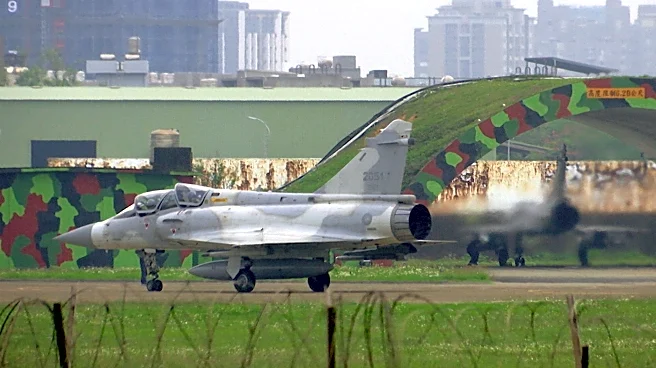
Taiwan's parliament has authorized the government to sign agreements for four U.S. arms sales packages valued at approximately $9 billion. This decision comes after warnings that failing to meet the deadline could result in Taiwan losing its place in the production
and delivery line, potentially sending a negative message to Washington. The arms packages include TOW anti-tank missiles, M109A7 self-propelled howitzers, Javelin missiles, and the HIMARS multiple launch rocket system. The approval follows a period of debate over defense spending, with the opposition demanding clarity on the proposals. Despite these challenges, the parliament passed the resolution unanimously, emphasizing national security and territorial integrity.
Why It's Important?
The approval of these arms deals is significant as it underscores Taiwan's strategic defense relationship with the United States, its primary international backer and arms supplier. This move is crucial for Taiwan's defense capabilities, especially in light of increasing military drills by China, which claims sovereignty over the island. The decision also reflects Taiwan's commitment to bolstering its defense amid regional tensions. For the U.S., this deal reinforces its role in supporting Taiwan's security, which is a critical aspect of its broader strategy in the Asia-Pacific region. The arms sales are part of a larger $11 billion package announced by Washington, highlighting the scale of military cooperation between the two entities.
What's Next?
Following the authorization, Taiwan's government is expected to sign the letters of offer and acceptance for the arms deals by the stipulated deadline to avoid delays. The defense ministry will likely submit a detailed report on the weapons delivery schedule for parliamentary review. This development may prompt further discussions within Taiwan regarding future defense spending and procurement strategies. Additionally, the U.S. may continue to encourage its allies, including Taiwan, to increase defense spending as part of its strategic objectives in countering regional threats.