
What's Happening?
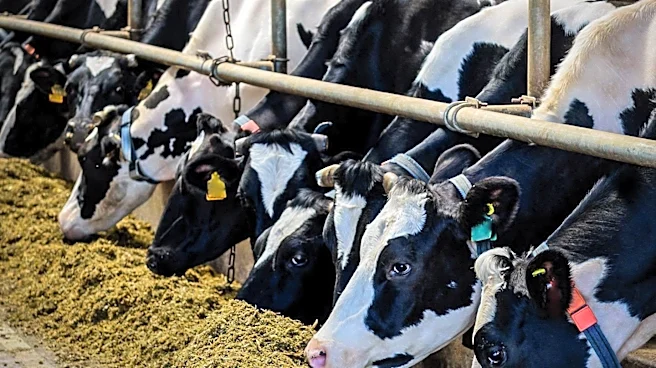
Nebraska is set to become home to the largest single-site cattle feedlot in the United States, with Blackshirt Feeders, LP, planning to house 200,000 head of cattle in Dundy County. This development is part
of a broader trend in the U.S. and globally towards industrial-scale animal confinement, often referred to as factory farming, where over 90% of animals consumed in the U.S. are raised in such conditions. The facility, which will cover nearly 700 acres, is projected to consume approximately 1.5 billion gallons of water annually and generate at least 4.4 billion pounds of manure. Local residents and environmental advocates have raised significant concerns regarding water usage, potential nitrate pollution, and the overall environmental impact. Despite local opposition and initial rejections, the Dundy County board ultimately approved the project, with Blackshirt Feeders subsequently expanding its proposed capacity. State regulators, including the EPA, have been criticized for a hands-off approach to regulating these large-scale operations, with current laws often failing to impose additional protections for facilities that far exceed the 'large' designation of 1,000 animals.
Why It's Important?
The establishment of the nation's largest feedlot in Nebraska highlights the ongoing tension between agricultural industrialization and environmental sustainability in the U.S. This project exemplifies the consolidation within the livestock industry, prioritizing efficiency and profit over local community well-being and ecological health. The massive water demands of such a facility in a drought-prone region, coupled with the potential for widespread nitrate contamination of the Ogallala Aquifer, pose a significant threat to a critical water source for millions. Furthermore, the lack of stringent regulatory oversight for Concentrated Animal Feeding Operations (CAFOs) allows these facilities to operate with minimal accountability for their environmental footprint, including greenhouse gas emissions. The case also underscores the power of the agricultural lobby in influencing policy, as efforts to monitor and curtail emissions from livestock have been consistently resisted. This situation could set a precedent for future large-scale agricultural developments, potentially exacerbating environmental challenges and community displacement in other rural areas across the country.
What's Next?
Blackshirt Feeders plans to submit an application to expand its capacity to 200,000 animals later this year, following previous approvals for 150,000 head. The company also intends to begin construction of a biodigester, a facility designed to convert manure into natural gas, which is projected to use an additional 500-acre feet of water annually. Local residents and environmental groups are expected to continue their opposition, focusing on the environmental and community impacts. The effectiveness of Blackshirt's proposed solutions, such as retiring irrigated wells to offset water usage and constructing a concrete surface for manure management, will be closely watched. Regulatory bodies, particularly the Nebraska Department of Water, Energy, and Environment (DWEE), will face continued scrutiny regarding their oversight and enforcement of environmental standards, especially concerning nitrate levels and manure disposal. The broader debate over the regulation of industrial agriculture and its environmental consequences is likely to intensify, potentially leading to renewed calls for stronger federal and state policies.
Beyond the Headlines
This development in Nebraska reflects a deeper societal and economic shift towards industrial food production, where the pursuit of cheap meat has led to the normalization of factory farming. The ethical implications of confining vast numbers of animals in such conditions, often without adequate space or natural light, are a growing concern for animal welfare advocates. Beyond the immediate environmental impacts, the 'gigantification' of agriculture can erode the traditional fabric of rural communities, replacing family farms with large corporate operations and leading to a decline in local control and community resilience. The reliance on 'technical fixes' like biodigesters to manage the problems created by scale raises questions about whether these solutions truly address the root causes of environmental degradation or merely mitigate symptoms. This situation also highlights the challenge of balancing economic development with environmental protection and community interests, particularly in states where agriculture is a dominant industry and political force.