






What's Happening?
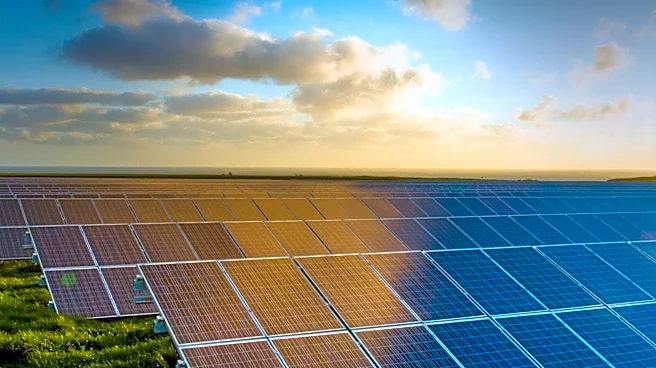
The world has surpassed 3 terawatts (TW) of installed solar capacity, marking a significant milestone in the expansion of photovoltaic energy. According to BloombergNEF (BNEF), it took approximately 10 years for global solar capacity to grow from 100
GW in 2012 to 1 TW. The second terawatt was added in less than three years, and the third terawatt was achieved in under two years. This rapid acceleration is expected to continue, with BNEF projecting global solar capacity to exceed 9 TW by 2036. China has been the primary driver of this growth, combining rapid deployment of solar capacity with large-scale manufacturing, which has helped reduce technology costs globally. While developed countries led the initial expansion, solar is now reaching new markets, with countries like Pakistan, Nigeria, and the Philippines experiencing strong growth, particularly in rooftop solar installations.
Why It's Important?
This milestone signifies solar energy's transition from a niche technology to a central component of global power-capacity expansion. The rapid growth, particularly in the last five years, demonstrates the increasing viability and adoption of solar power worldwide. For the U.S., this global trend has several implications. It indicates a maturing supply chain for solar components, potentially leading to lower costs for domestic installations and manufacturing. The challenges faced by leading countries like China, such as grid integration and the need for energy storage, provide valuable lessons for the U.S. as it continues its own renewable energy transition. The expansion into developing countries also highlights the global shift towards diversified energy sources, which could impact international energy markets and geopolitical dynamics related to energy security and climate change. The U.S. can leverage these global advancements in technology and deployment strategies to accelerate its own clean energy goals.
What's Next?
The next phase of solar expansion will focus heavily on addressing challenges related to transmission, storage, and demand flexibility. As photovoltaic generation continues to grow, the ability to effectively use solar electricity at the right time and in the right place will become crucial. Energy storage capacity, particularly lithium-ion batteries, will play a decisive role in absorbing excess electricity during peak solar generation and discharging it when needed. BNEF projects that the share of developing countries in new solar installations will increase from 2026, with over a quarter of global installed capacity expected to be in these regions by 2036. This shift will require significant investment in grid infrastructure and smart energy management systems globally. For the U.S., this means continued emphasis on grid modernization, battery storage solutions, and policies that support flexible energy demand to fully integrate increasing solar capacity.
Beyond the Headlines
The achievement of 3 TW in global solar capacity highlights a fundamental shift in the energy paradigm, moving away from fossil fuel dominance towards renewable sources. This transition has profound ethical and economic implications, particularly concerning energy access and equity. While solar expansion is broadening geographically, deployment remains concentrated in a few markets, raising questions about equitable distribution of clean energy benefits. The challenges of grid integration and storage underscore the need for holistic energy system planning, moving beyond just generation capacity to encompass transmission, distribution, and consumption patterns. The cost reductions driven by large-scale manufacturing, primarily in China, also bring to light the complexities of global supply chains and their impact on national energy independence and economic competitiveness. This milestone is not just about megawatts; it's about reshaping global economies, fostering technological innovation, and addressing climate change on an unprecedented scale.