








What's Happening?
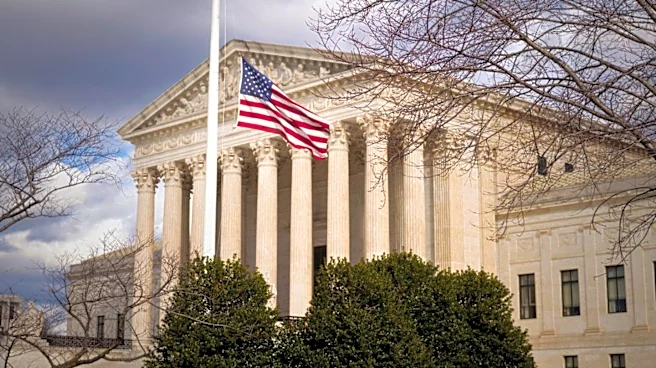
The Department of Homeland Security (DHS) has announced new expiration dates for work permits of immigrants with Temporary Protected Status (TPS), following a Supreme Court decision that allows the termination of their legal status. This decision affects
nationals from countries including Haiti, Syria, Burma, Yemen, Ethiopia, South Sudan, and Somalia. The Supreme Court's ruling supports the Trump Administration's efforts to end TPS for these countries, arguing that conditions have improved enough for individuals to return home. Despite the ruling, lower courts have not yet updated their cases, leaving work authorizations in place until the newly announced expiration date of July 10. The decision has sparked concerns among lawmakers and employers about the economic impact, as many TPS holders work in critical sectors like healthcare and hospitality.
Why It's Important?
The Supreme Court's decision and the subsequent DHS announcement have significant implications for the U.S. economy and the affected individuals. TPS holders contribute to various sectors, particularly healthcare, where their sudden departure could lead to workforce shortages. The decision also highlights ongoing debates about immigration policy and the balance between temporary protection and long-term residency. The ruling exposes divisions within political parties, with some Republicans and Democrats criticizing the move due to potential humanitarian and economic consequences. The situation underscores the need for comprehensive immigration reform to address the status of long-term TPS holders who have established lives in the U.S.
What's Next?
With the expiration date set for July 10, TPS holders and their employers face a tight timeline to adjust to the new reality. There may be legal challenges or calls for legislative action to provide a more permanent solution for those affected. The decision could prompt further political debate and advocacy efforts from immigrant rights groups and affected communities. Employers in sectors heavily reliant on TPS workers may seek temporary solutions to mitigate workforce disruptions. The situation remains fluid, with potential for further developments as stakeholders respond to the Supreme Court's ruling and DHS's actions.