





What's Happening?
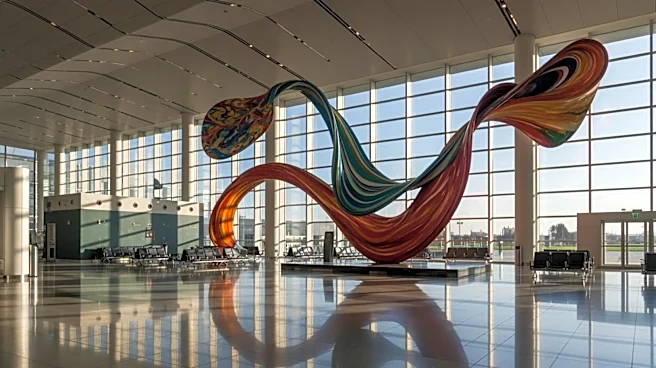
Singapore Changi Airport has been recognized as the world's second-best airport for art, according to a ranking by London-based aviation consultancy Skytrax. This category, introduced in 2023, evaluates airports based on their art installations and sculptures,
which are used to enhance customer engagement and passenger comfort. The ranking is dominated by American airports, with Houston Airports taking the top spot. Other U.S. airports in the top ten include Denver International Airport at third, San Diego International Airport at seventh, O'Hare International Airport at eighth, and San Francisco International Airport at ninth. These airports are noted for their innovative use of art to transform transit spaces into engaging environments.
Why It's Important?
The inclusion of multiple U.S. airports in the top rankings for art installations underscores the growing importance of passenger experience in the aviation industry. By investing in art and cultural installations, airports are not only enhancing the aesthetic appeal of their spaces but also improving the overall travel experience. This focus on art can lead to increased passenger satisfaction, potentially boosting airport traffic and revenue. Moreover, it reflects a broader trend in the industry where airports are becoming more than just transit points, evolving into destinations that offer unique cultural and artistic experiences.
What's Next?
As airports continue to compete for passenger traffic, the emphasis on art and cultural installations is likely to grow. This trend may encourage more airports to invest in similar initiatives, potentially leading to new collaborations with artists and cultural institutions. Additionally, the success of these programs could inspire other sectors within the travel and hospitality industry to explore similar strategies for enhancing customer experience. Stakeholders, including airport authorities and local governments, may also consider the economic and cultural benefits of such investments, potentially leading to increased funding and support for public art projects.
Beyond the Headlines
The integration of art in airports raises interesting questions about the role of public spaces in cultural expression. As airports become venues for art, they challenge traditional notions of where art can be experienced and who has access to it. This democratization of art could have long-term cultural implications, making art more accessible to a broader audience. Furthermore, it highlights the potential for public spaces to serve as platforms for cultural dialogue and exchange, fostering a greater appreciation for diverse artistic expressions.