
What's Happening?
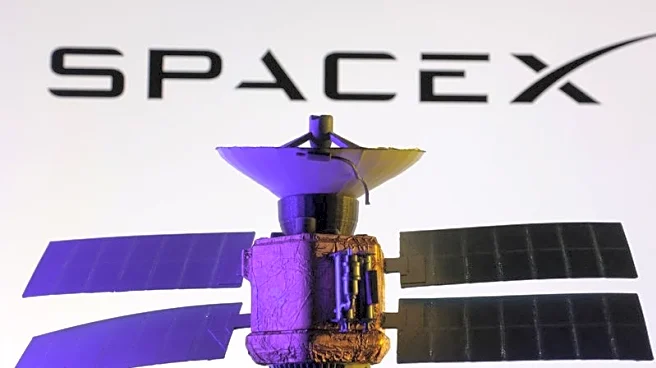
SpaceX has achieved a significant milestone by launching over 10,000 Starlink satellites, with approximately 9,000 currently operational, representing over 60% of all active satellites orbiting Earth.
However, the company is experiencing a loss of one to two satellites per day due to their limited shelf life. Recently, SpaceX lost contact with a Starlink satellite following a mishap, raising concerns about potential collisions in space. This incident highlights the risks associated with operating large satellite constellations, as experts worry about the possibility of collisions and the creation of space debris. SpaceX's competitors, including Amazon and China's state-backed aerospace corporation, are also planning to launch their own satellite constellations, which could further increase the number of objects in orbit.
Why It's Important?
The rapid expansion of satellite constellations by companies like SpaceX is transforming global internet connectivity, but it also poses significant risks to the orbital environment. The potential for collisions and the creation of space debris could threaten future space exploration and the safety of astronauts. The situation underscores the need for improved space traffic management and regulatory oversight to prevent catastrophic events like the Kessler Syndrome, where a single collision could trigger a cascade of further collisions. As more companies enter the satellite broadband market, the competition could drive innovation but also exacerbate the challenges of managing space traffic and ensuring the sustainability of the orbital environment.
What's Next?
SpaceX and other satellite operators will need to enhance their collision avoidance systems and improve satellite design to minimize the risk of debris creation. Regulatory bodies may need to implement stricter guidelines and monitoring systems to manage the increasing number of satellites. The development of international agreements on space traffic management could become a priority to ensure the long-term sustainability of space activities. Additionally, advancements in satellite technology and debris mitigation strategies will be crucial in addressing the challenges posed by the growing number of satellites in orbit.
Beyond the Headlines
The increasing number of satellites in orbit is not only a technical challenge but also raises ethical and environmental concerns. The potential impact on astronomical observations and the release of pollutants during satellite reentry could have long-term effects on scientific research and the Earth's atmosphere. The situation calls for a balanced approach that considers both the benefits of satellite technology and the need to protect the space environment. As the space industry continues to grow, stakeholders will need to collaborate on developing sustainable practices and policies that address these complex issues.