



What's Happening?
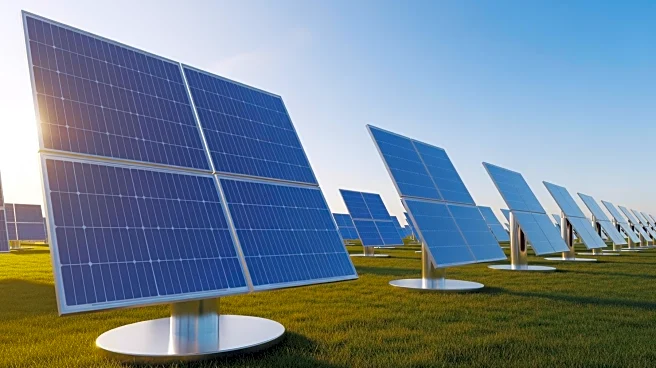
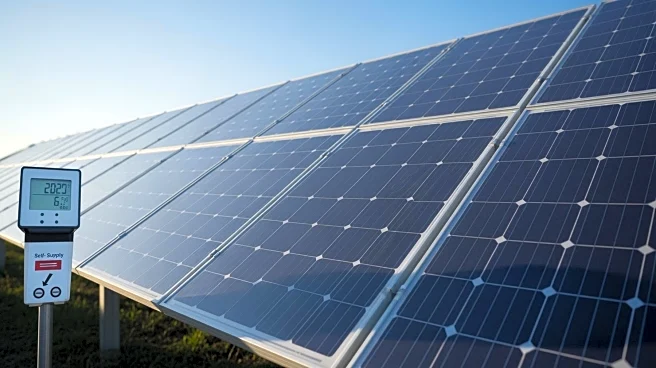
The Department of Energy in Abu Dhabi has introduced a new policy aimed at promoting the use of solar panels and battery energy storage systems among residents and businesses. Effective from February 5, 2026, the policy, titled 'Use of Solar Photovoltaic
and Battery Energy Storage Systems for Self-Supply,' allows individuals and companies to generate their own electricity. This initiative is part of Abu Dhabi's broader strategy to achieve Net Zero goals by encouraging the installation of Distributed Photovoltaic (DPV) systems and Battery Energy Storage Systems (BESS). The policy provides a clear framework for installation, licensing, and grid connection, empowering consumers to reduce their reliance on the main grid and lower energy costs. The Department of Energy emphasizes energy efficiency as a preliminary step, urging upgrades to energy-efficient appliances and building performance improvements.
Why It's Important?
This policy is significant as it represents a shift towards decentralized energy production, which can lead to reduced demand on large power plants and lower environmental impact. By enabling self-supply, the policy not only helps consumers save on energy bills but also supports the emirate's sustainability goals. The initiative could lead to a decrease in the need for costly infrastructure upgrades and reduce reliance on conventional power sources. Additionally, the policy's focus on transparency and regulatory oversight ensures that private systems integrate smoothly with the existing grid, maintaining stability and reliability. This move could serve as a model for other regions aiming to enhance their clean energy strategies.
What's Next?
The Department of Energy plans to review the policy annually to ensure it aligns with Abu Dhabi's evolving energy objectives. As the policy encourages more widespread adoption of solar technology, it is likely to stimulate further innovation and investment in renewable energy solutions. Stakeholders, including businesses and residents, may respond by increasing their participation in the clean energy transition, potentially leading to broader economic and environmental benefits. The policy's success could influence similar initiatives in other regions, contributing to global efforts to combat climate change.