





What's Happening?
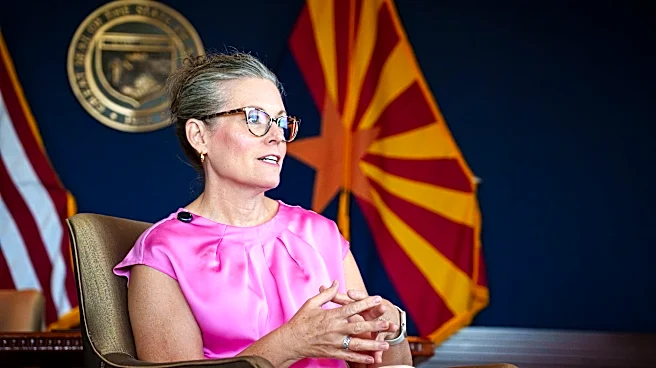
Governor Katie Hobbs of Arizona has publicly stated her opposition to a statewide moratorium on data center construction. This stance comes amidst calls from Attorney General Kris Mayes for an immediate pause in development to address concerns over water
shortages and high energy costs. Governor Hobbs emphasized that data centers are a crucial component of Arizona's high-tech economy and believes that a blanket moratorium is not the appropriate solution. She highlighted the importance of ensuring these facilities operate sustainably, pay for themselves, and do not contribute to increased utility costs for Arizonans. Hobbs also noted her previous efforts to end data center tax credits on computer equipment, though lawmakers only agreed to a three-year pause, leading to a surge of applications before the credits sunsetted. The Arizona Chamber of Commerce has also weighed in, cautioning against a moratorium and suggesting that such a move would impact modern conveniences reliant on data centers.
Why It's Important?
Governor Hobbs' decision against a statewide moratorium on data center development carries significant implications for Arizona's economic landscape and environmental policy. Data centers are major consumers of water and electricity, and their continued expansion raises critical questions about resource management in a state already facing water scarcity issues. Her position underscores a balancing act between fostering economic growth, particularly in the high-tech sector, and addressing environmental sustainability concerns. The debate highlights a broader national challenge where states must reconcile the demands of technological advancement with the imperative of responsible resource utilization. The outcome of this policy direction will influence Arizona's attractiveness to tech companies, its energy infrastructure, and the long-term availability and cost of water for its residents and other industries. It also sets a precedent for how state governments approach the regulation of resource-intensive industries in arid regions.
What's Next?
The immediate future will likely see continued debate and potential legislative efforts regarding data center development in Arizona. Attorney General Kris Mayes and other proponents of a moratorium are expected to persist in advocating for a pause to allow for the creation of a comprehensive plan to manage water shortages and energy costs. Governor Hobbs' administration will likely focus on implementing policies that encourage sustainable data center operations and ensure these facilities contribute positively to the state's economy without unduly burdening its resources or residents. This could involve exploring new regulatory frameworks, incentives for water and energy efficiency, or localized zoning decisions rather than a statewide ban. The Arizona Commerce Authority, which oversees relevant programs, will also play a role in managing existing and future data center applications. The ongoing discussion will likely involve various stakeholders, including environmental groups, tech industry representatives, and local communities, as they seek to influence the state's approach to this critical issue.
Beyond the Headlines
The controversy surrounding data center development in Arizona extends beyond immediate economic and environmental concerns, touching upon deeper issues of technological dependency and societal priorities. The Arizona Chamber of Commerce's argument that a moratorium would necessitate giving up modern conveniences like artificial intelligence, social media, and online banking highlights the pervasive integration of data centers into daily life. This raises questions about the true cost of digital convenience and whether society is prepared to confront the resource demands of its technological infrastructure. Furthermore, the debate reflects a growing tension between rapid technological expansion and the finite nature of natural resources, particularly in vulnerable ecosystems. It prompts a re-evaluation of what constitutes 'sustainable growth' in the digital age and whether current regulatory frameworks are adequate to address the long-term impacts of such industries. The ethical dimension of resource allocation, especially water, in a desert state like Arizona, will likely become an increasingly prominent feature of public discourse, potentially influencing future policy decisions across various sectors.