
What's Happening?
Prime Minister Keir Starmer's recent decision to allow the British military to board Russian 'shadow fleet' ships has not significantly affected the number of these vessels passing through UK waters. Despite
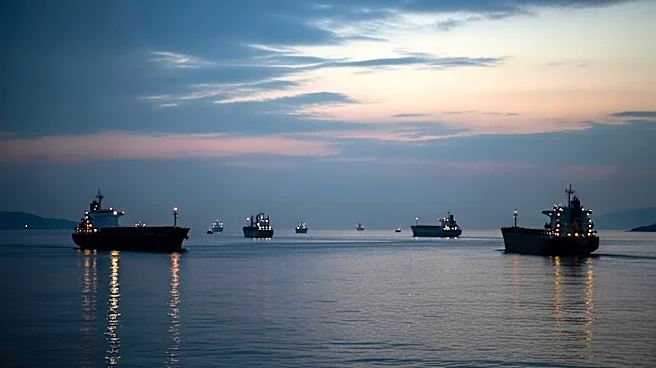
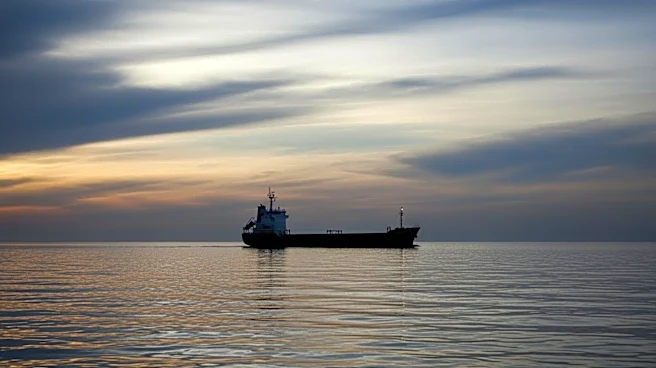
the threat issued on March 25, a Reuters analysis indicates that at least 98 Russian vessels, which are subject to UK sanctions, have continued to transit through British waters, maintaining a similar frequency as in previous months. These ships, often with opaque ownership structures, are known to transport oil, grains, and arms, supporting Russia's ongoing conflict in Ukraine. The British Ministry of Defence has not reported any boardings or detentions of these vessels, which contrasts with actions taken by other European countries like France, Belgium, and Sweden, who have detained similar ships.
Why It's Important?
The continued passage of Russian 'shadow fleet' vessels through UK waters despite sanctions highlights challenges in enforcing maritime security and sanctions. The lack of action may undermine the credibility of the UK's threats and could embolden further non-compliance by sanctioned entities. This situation also reflects broader geopolitical tensions, as the Kremlin has labeled the UK's sanctions as illegal and potentially retaliatory. The UK's limited response may be attributed to its reduced naval capabilities and the absence of a dedicated law-enforcement coastguard, unlike some of its European counterparts. This development could impact the UK's standing in international maritime security and its ability to enforce sanctions effectively.
What's Next?
The UK may face increased pressure to demonstrate its commitment to enforcing sanctions against Russian vessels. This could involve enhancing maritime enforcement capabilities or collaborating more closely with European allies who have successfully detained such ships. The situation may also prompt discussions on strengthening international maritime laws and cooperation to address the challenges posed by 'shadow fleets.' Additionally, the UK might need to consider diplomatic strategies to mitigate potential retaliatory actions from Russia, which could further strain bilateral relations.