
What's Happening?
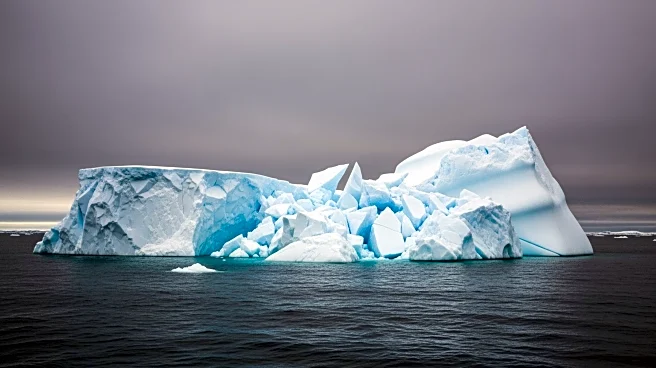
The mega-iceberg A23a, once the world's largest, is disintegrating into 'blue mush' after 40 years at sea. Originally breaking off from Antarctica's Filchner-Ronne Ice Shelf in 1986, A23a remained stationary
for decades due to its submerged base catching on the seafloor. It finally broke free in 2020, drifting into warmer waters, which accelerated its melting. Recent satellite images show the iceberg, now a third of its original size, covered in melt ponds and surrounded by smaller icebergs. This transformation marks the end of one of the oldest and largest icebergs on record.
Why It's Important?
The disintegration of A23a highlights the effects of climate change on polar ice masses. As icebergs like A23a melt, they contribute to rising sea levels, which can have significant impacts on coastal communities worldwide. The event underscores the importance of monitoring polar regions to understand climate dynamics and their global implications. The iceberg's journey and eventual demise also provide valuable data for scientists studying ice shelf stability and ocean currents, which are crucial for predicting future climate scenarios.
What's Next?
As A23a continues to break apart, scientists will likely monitor its remnants to study the effects of melting icebergs on ocean ecosystems and currents. The data collected could inform climate models and help predict future changes in polar ice dynamics. Additionally, the event may prompt further research into the impacts of climate change on Antarctica and the potential consequences for global sea levels. Policymakers might use these findings to advocate for stronger climate action and mitigation strategies.