



What's Happening?
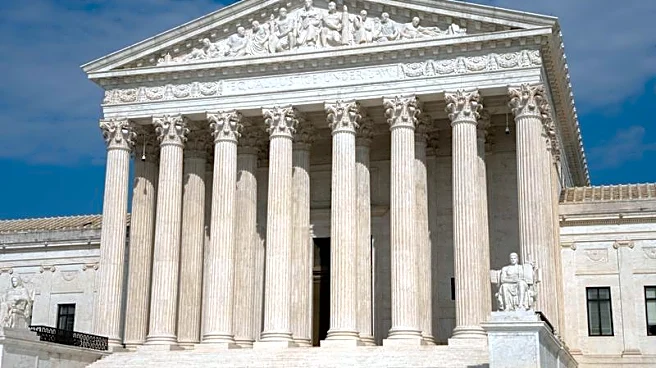
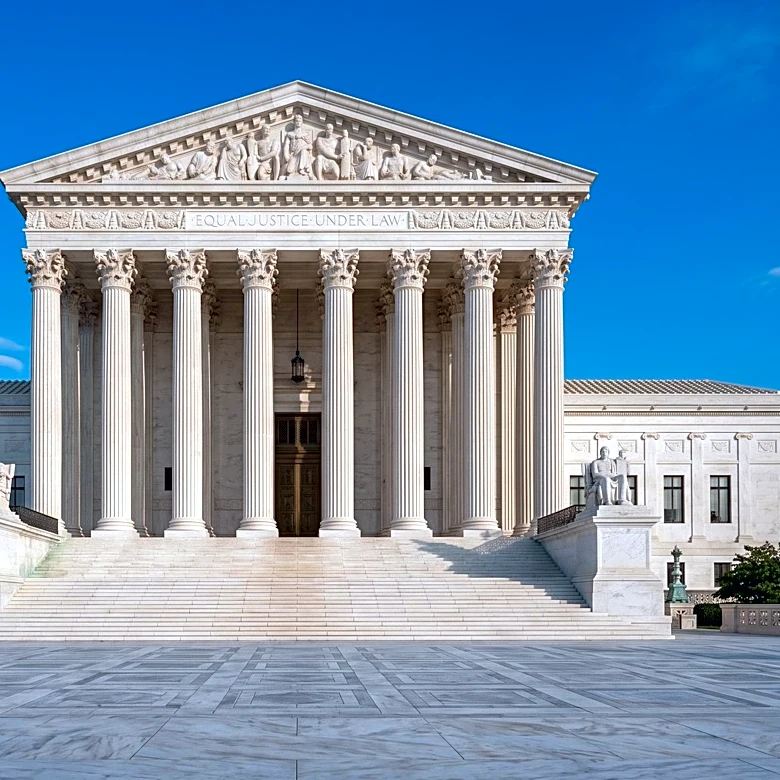
Justice Samuel Alito has released his annual financial disclosure for 2025, revealing travel to the United Kingdom, Italy, and Arizona, alongside $33,333 in income from a forthcoming book. This disclosure, filed on August 11 and released on Monday morning,
was the last among his Supreme Court colleagues, who submitted their forms by the May 15 deadline. The Administrative Office of the U.S. Courts, which supports federal courts including the Supreme Court, published the other justices' forms in late June. Justice Alito had received a 90-day extension for his submission. The reported book income of $33,333 from Hachette Book Group is for his upcoming work, 'So Ordered: An Originalist’s View of the Constitution, the Court, and Our Country,' scheduled for release on October 6. This amount is considerably less than the book incomes reported by some of his colleagues, such as Justice Ketanji Brown Jackson, who received over $1 million for her memoir.
Why It's Important?
Justice Alito's financial disclosure is important as it provides insight into potential conflicts of interest and adherence to ethical standards for federal judges. The transparency, though described as 'relatively opaque' by the source, is crucial for public trust in the judiciary. His continued ownership of stocks in chemical and energy companies, including 3M, Abbott Laboratories, Dow, ConocoPhillips, Phillips 66, and OGE Energy Corp., has drawn scrutiny from watchdog and progressive groups. These groups argue that his investments in the energy industry should lead to his recusal from cases involving such companies. A notable example is the upcoming Suncor Energy v. County Commissioners of Boulder County case, which involves a Colorado county seeking damages from oil and gas companies for their alleged role in exacerbating climate change. The court is scheduled to hear oral arguments in this dispute on October 5, making the timing of this disclosure particularly relevant.
What's Next?
The release of Justice Alito's financial disclosure is likely to intensify calls for his recusal from cases involving the energy sector, particularly with the Suncor Energy v. County Commissioners of Boulder County case scheduled for oral arguments on October 5. Watchdog and progressive groups are expected to continue advocating for stricter ethical guidelines and greater transparency regarding judicial investments. The Administrative Office of the U.S. Courts will continue to manage and publish these disclosures, which are intended to provide information about potential conflicts of interest. Future discussions may also arise regarding the disparity in reported book incomes among justices and the broader implications for judicial ethics and public perception. The ongoing debate about judicial stock ownership and its impact on impartiality will likely remain a significant topic in legal and political discourse.
Beyond the Headlines
Beyond the immediate financial details, Justice Alito's disclosure highlights broader ethical and transparency challenges within the U.S. judiciary. The 'relative opacity' of these disclosures, as noted in the source, raises questions about the sufficiency of current ethical standards in fully addressing potential conflicts of interest. The significant difference in book income reported by various justices, from tens of thousands to over a million dollars, also brings to light the diverse financial activities of Supreme Court justices and the potential for external earnings to influence public perception of their impartiality. The ongoing scrutiny of Justice Alito's investments in the energy sector underscores a persistent tension between personal financial interests and the demands of judicial neutrality, potentially fueling calls for more stringent regulations on judicial stock ownership and external income sources to safeguard the integrity of the federal courts.