
What's Happening?
Iran has submitted a counterproposal to the United States, seeking an end to the ongoing war, the gradual opening of the Strait of Hormuz, and the lifting of the U.S. naval blockade on Iranian ports. The
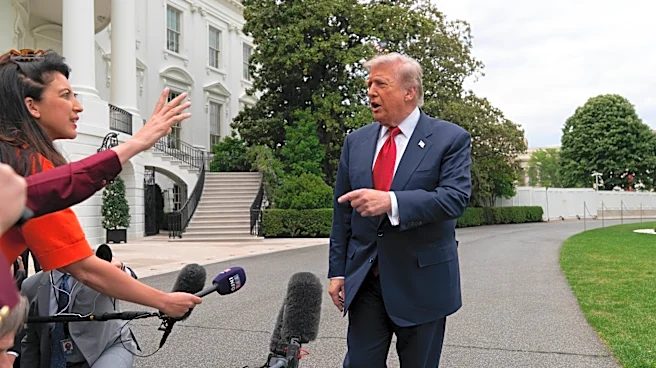
proposal includes a 30-day period for nuclear negotiations, during which Iran offers to dilute some of its highly enriched uranium stockpile. However, Iran demands guarantees to retrieve its uranium if negotiations fail. President Trump has rejected the proposal, insisting on the complete handover of Iran's uranium stockpile and a permanent suspension of enrichment activities. The proposal reflects Iran's strategy to leverage economic pressure on the U.S. by maintaining high oil prices.
Why It's Important?
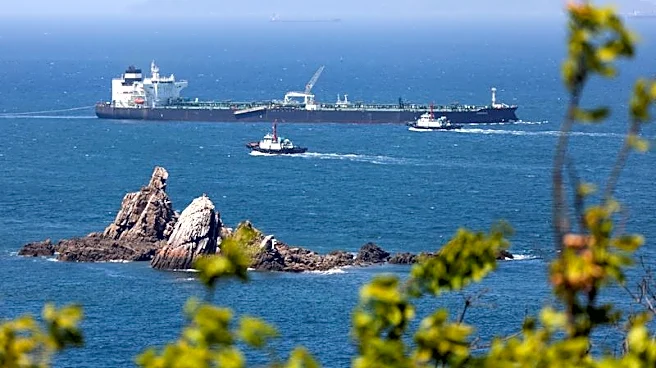
The proposal underscores the strategic importance of the Strait of Hormuz, a vital waterway for global oil transportation. Iran's demands highlight its intent to secure economic relief and assert its regional influence. The U.S. rejection of the proposal indicates a continued hardline stance on Iran's nuclear program. The situation has broader implications for global energy markets, as disruptions in the Strait could lead to increased oil prices. The negotiations also affect U.S. relations with its allies in the Middle East, who are concerned about Iran's regional ambitions and military capabilities.
What's Next?
The U.S. and Iran are likely to continue diplomatic efforts, with potential involvement from international mediators. Iran's proposal to involve China as a guarantor suggests a shift towards multilateral negotiations. The U.S. may seek to strengthen alliances with regional partners to counter Iran's influence. The ongoing conflict and negotiations will be closely monitored by global markets and political analysts, as any resolution or escalation could have significant economic and geopolitical consequences.