





What's Happening?
The Federal Emergency Management Agency (FEMA) has approved over $86 million in post-disaster funding for Public Assistance and the Hazard Mitigation Grant Program across the Southeast region. This funding aims to help states, local communities, and territories
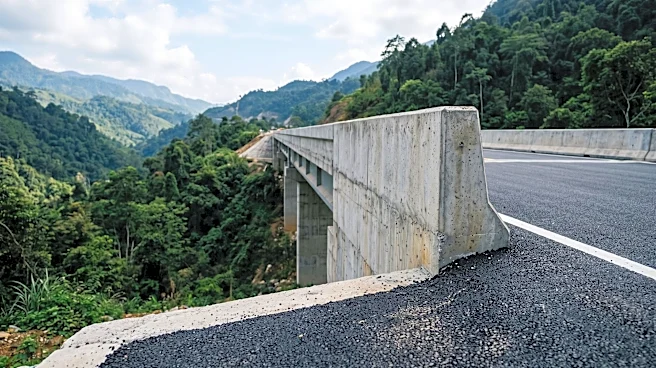
recover from disasters, rebuild more resilient infrastructure, and protect against future events. Of this amount, $84 million is allocated under FEMA’s Public Assistance program for Florida, Kentucky, Mississippi, North Carolina, South Carolina, and Tennessee. Specific projects in North Carolina include over $10.5 million for the Department of Transportation for road and bridge repairs damaged by Hurricane Helene in several counties, nearly $9.8 million for North Carolina Emergency Management for emergency protective measures following Helene, and nearly $6.4 million for Asheville-Buncombe Community Christian Ministry for building repairs.
Why It's Important?
This FEMA funding is crucial for the affected communities in the Southeast, enabling them to address the immediate and long-term impacts of natural disasters. By supporting critical infrastructure repairs, public building restoration, and emergency protective measures, the funds help stabilize communities and accelerate their recovery. The Hazard Mitigation Grant Program component is particularly significant as it focuses on proactive measures to reduce future disaster damage, fostering greater resilience. This investment underscores the federal government's role in disaster response and preparedness, which is vital for protecting lives, property, and economic stability in regions prone to severe weather events. The funding empowers local entities to implement tailored recovery strategies, ensuring resources are directed where they are most needed.
Beyond the Headlines
The continuous need for federal disaster funding highlights the escalating challenges posed by climate change and extreme weather events across the U.S. While these funds are essential for recovery, they also underscore the broader societal and economic costs associated with such disasters. The emphasis on hazard mitigation, alongside immediate relief, reflects a growing recognition of the importance of proactive measures to build resilience. However, the effectiveness of these programs can be hampered by issues such as misinformation, as seen during Hurricane Helene in 2024, where rumors disrupted FEMA operations and delayed aid. This suggests that beyond financial aid, robust communication strategies and public trust are equally critical for effective disaster response and long-term community resilience.